I wasn’t sure any of the school house lilies survived the freeze and the rearrangement of my container garden. They live outside the tired rosemary, which did not survive the Texas deep freeze in February. Since it didn’t survive, and I didn’t replant, I haven’t been watering that area. I was rather surprised to see some bright red blooms amongst the dead stems.
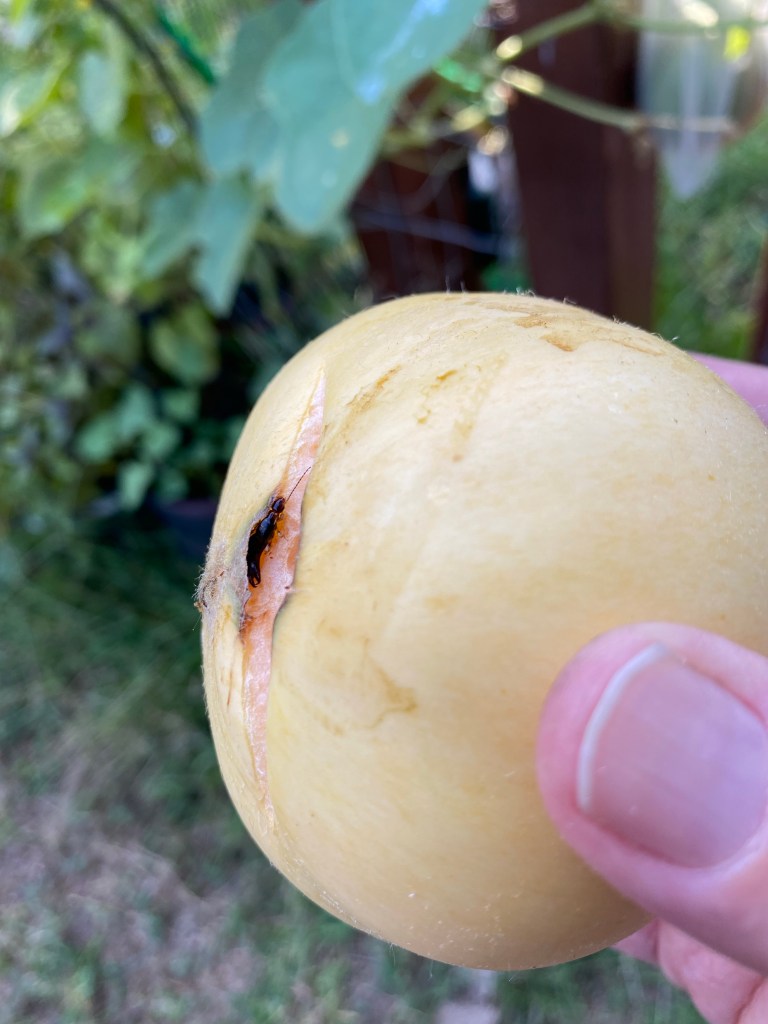
The bugs found the ripe melon. I’m not sure if the earwig dug the hole, or the caterpillars dug it and the earwig was hiding out, but the chickens really enjoyed both the insect and the fruit. I sprayed the remaining melons with diluted Neem oil and Castille soap. Maybe we will get another melon before the bugs do; there are currently two melon candidates for bug roulette.
Chickens preparing to tuck into a melon (the earwig was the first to go)
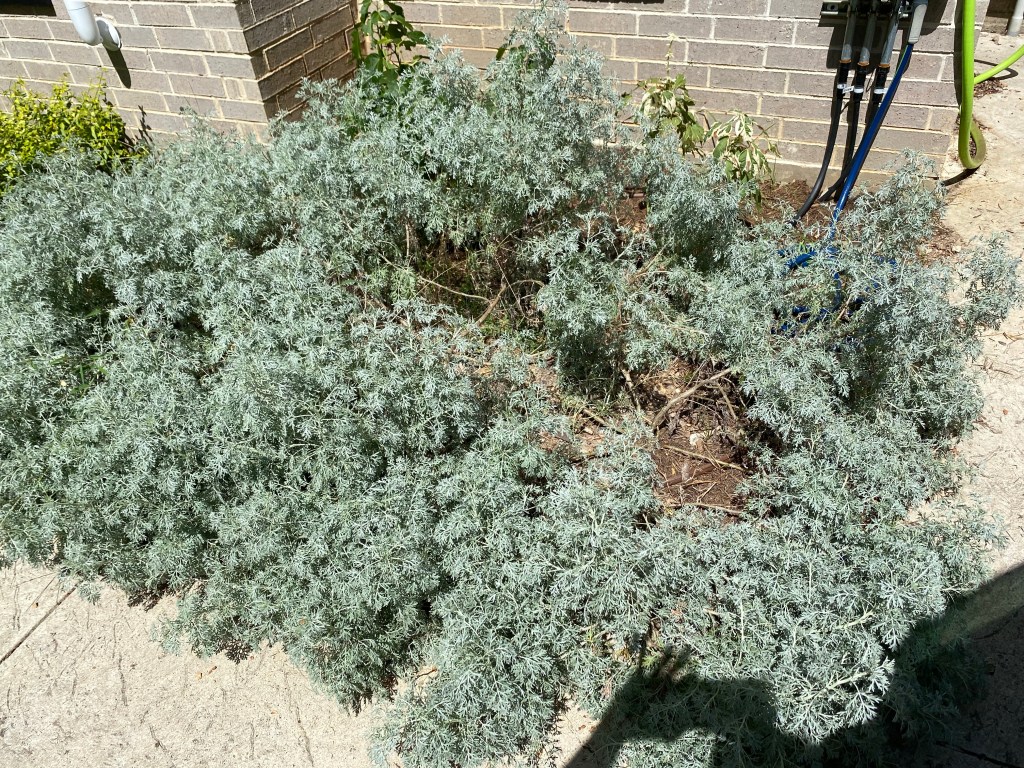
I made the rookie mistake of letting my artemisia get too tall. The tops got too heavy and the limbs laid down on the ground in protest, ruining the pleasant full look. I’ve read that severe pruning will kill the plants, so the plan it to replace the leggy Artemisia with new Artemisia, then keep it trimmed low so it doesn’t get so large as to lay over.
Overgrown Artemisia
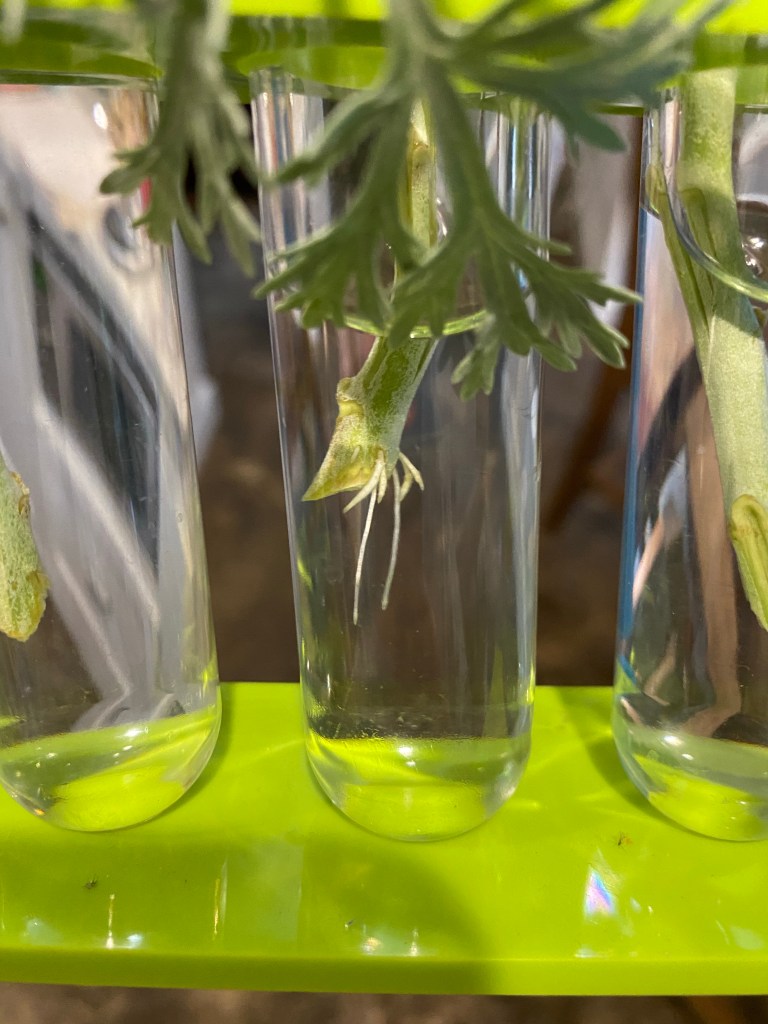
Rather than buy new plants, I’m rooting out some cuttings. I’ve read that other gardeners have had success with this method, and it doesn’t hurt to try! I cut six healthy looking ends and placed them in a test tube rack (because I had it). I was thrilled to see roots starting to form after two weeks! I will keep changing out the water daily, and attempt a replant when the roots have filled in more.
Roots starting on the Artemisia cuttings
A ladybug thought the cuttings were a good place to hang out, so I’m going to take that as a good sign.
We have a ripe melon! My first ever melon from my garden (ever)!
Ripe melon on the scale weighs 132 g (4.7 oz)
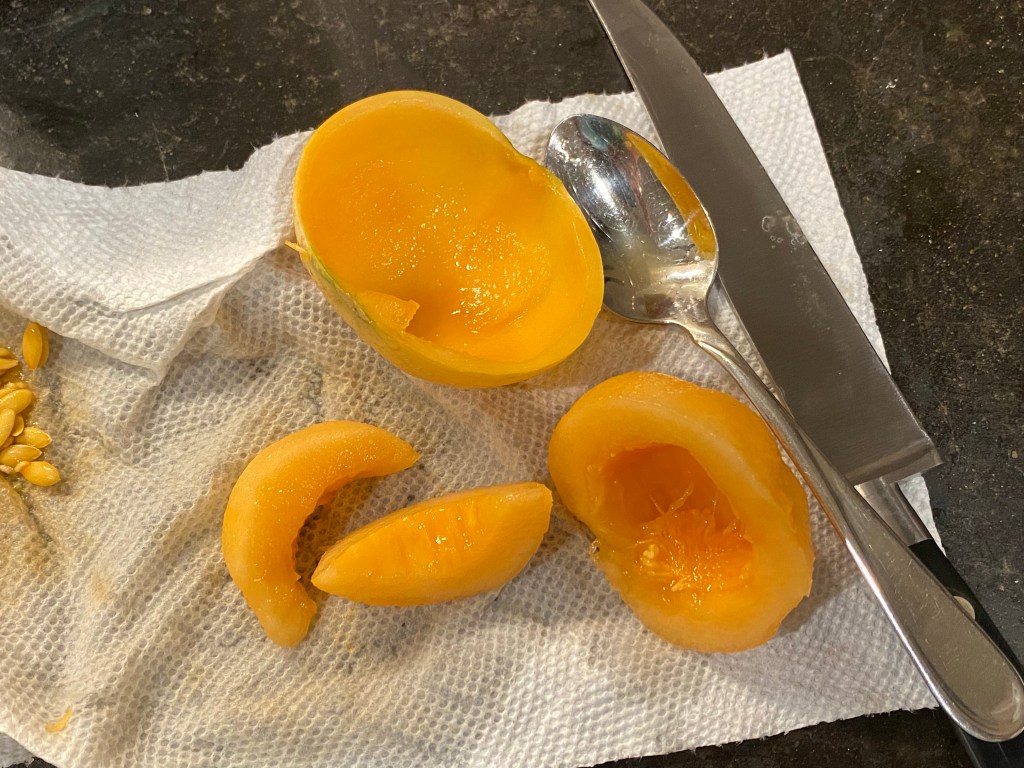
But it is very small. The description said the melons would be 2 pounds. This one is only 15% of that. I saw it stop growing, then begin to ripen and wondered if it would taste good at all. I needn’t have worried. The melon was amazing. The smell was wonderful and the taste was better than any cantaloupe I’ve ever had. It was ripe enough to scoop from the rind, leaving little waste, which was good because we each only had two tiny slices.
Aspire melon seeded, scooped, and sliced
The description also said that the vines would set fruit all at once, but mine don’t do that either. I planted three mounds at the same time, and those vines continue to produce flowers and set new fruit. After I lost two globes to mischief and insects, I had two more start to develop. Interesting.
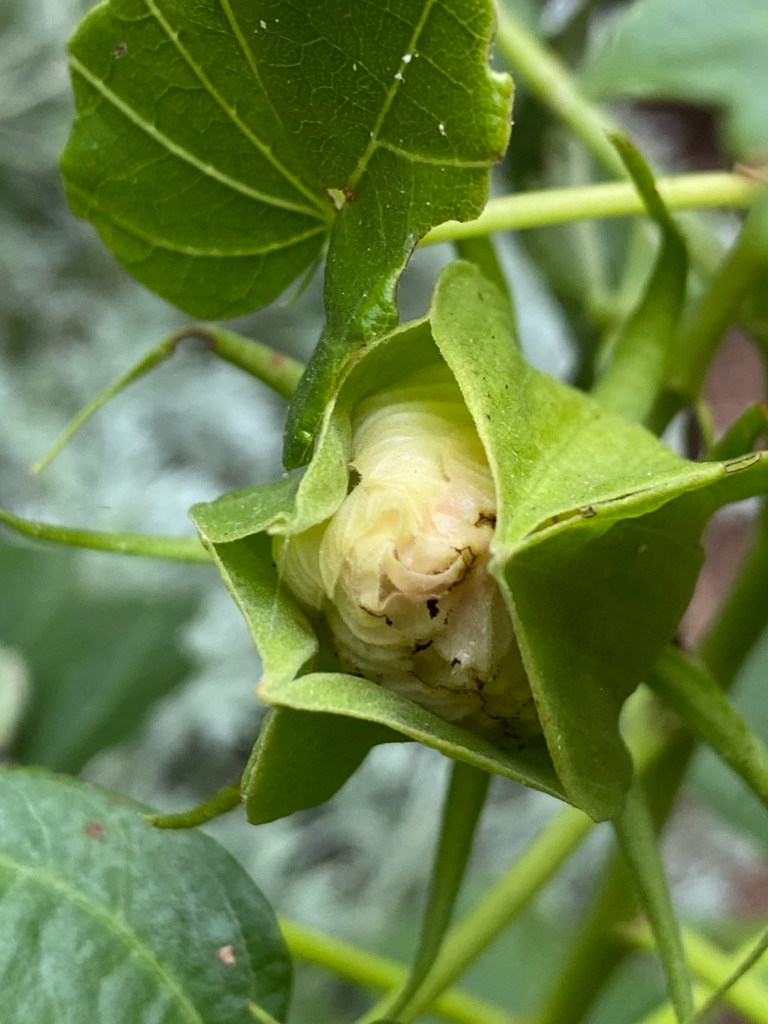
My hibiscus, which was blooming so beautifully, stopped blooming. The buds would form, but would not open fully, just crack a bit, then turn brown. Internet detective time. What I suspect is that little critters called thrips are to blame. These are tiny, tiny insects that apparently can cause quite the havoc both in the garden and at home. There are 6,000 varieties and can they reproduce asexually. (This is Wikipedia knowledge, so take it as you will.)
Probable thrip damaged hibiscus bud
As recommended, I removed all the damaged buds before they could fall to the ground to start a new generation, and sprayed the plant with a mixture of Neem oil, Peppermint oil, and Castile soap (3% Neem, 2% Castille, and 2% peppermint in water mixed in a spray bottle) because I don’t want to use heavy pesticides. I added the peppermint because Neem oil has an unpleasant odor. I sprayed at dusk to reduce impact on pollinating insects. A week later, we had a bloom!






 Critters and Craft