It was the dog.

I may need to give an official apology to the neighborhood cats and racoons. I maligned them, accusing one or the other of bringing down an unripe aspire melon awhile back. My eldest caught our dog Griffin in the act of eating an almost ripe melon that he had torn from the netting on the fence this week. Are you kidding me, dog?!?

The evidence and the guilty party

We gave it a good wash, cut off the parts that had teeth marks, and ate it anyway. Not quite fully ripe, but still very good.
Missed one

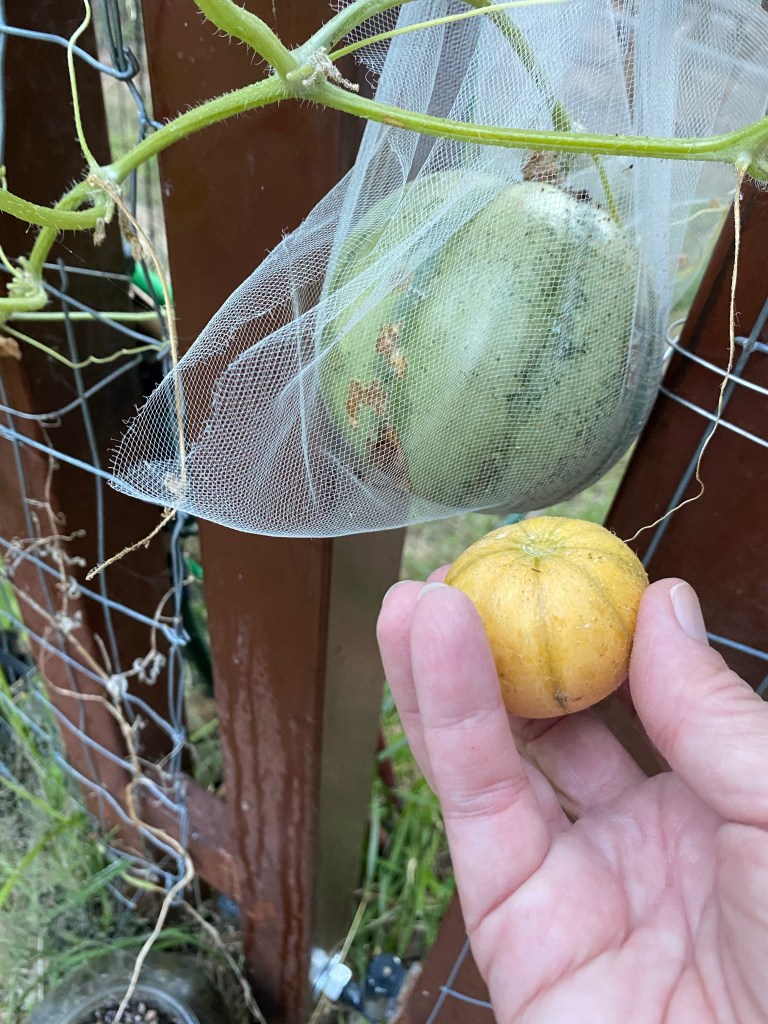
Tiny ripe melon compared to melon still on the vine

I spotted a flash of round yellow on the ground near my garden. It seems that I missed slinging one of the developing melons, it grew too heavy for the vine, dropped to the ground, and ripened there. The neem spray did the job to keep the bugs away, and although it was small, it smelled and tasted like melon. Still waiting on the “large” melon to ripen!

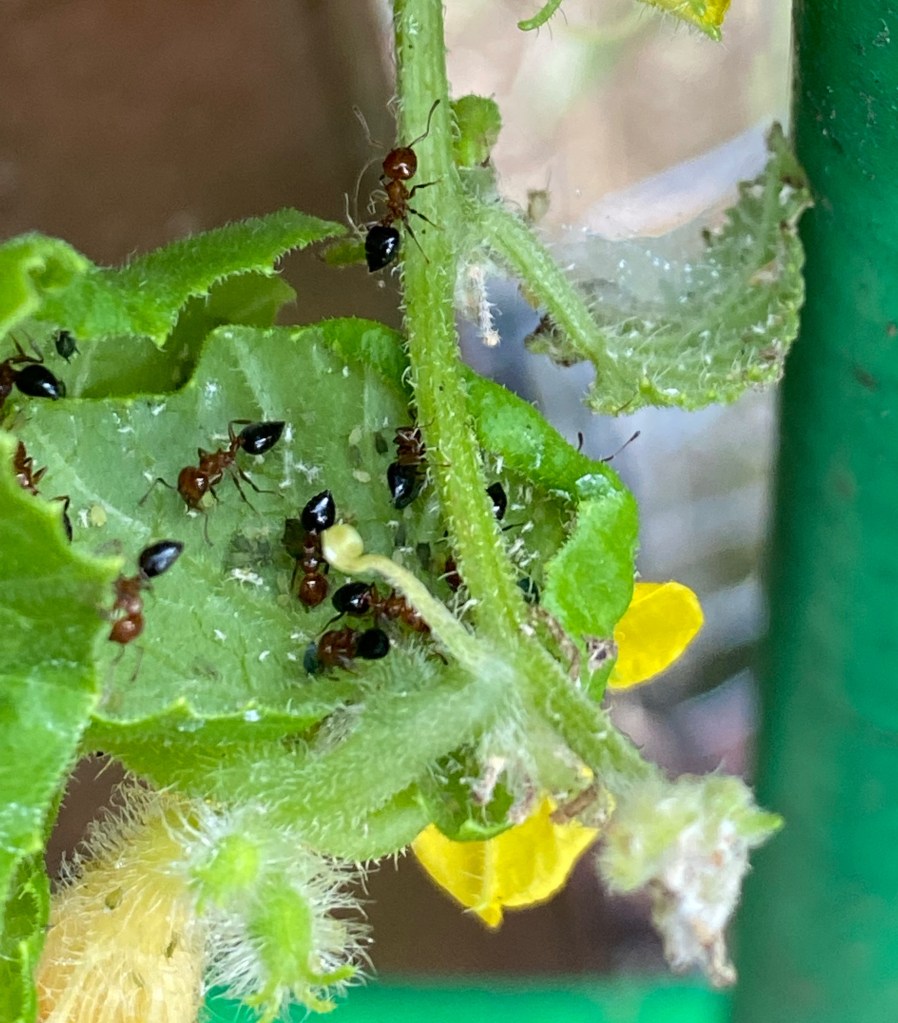
Ant farm

No, we didn’t add one of those clear boxes full of ants to our household menagerie, but I did find the ants themselves farming aphids on my melon vines! I have heard of this symbiotic relationship between ants and aphids but have never knowingly witnessed it. The aphids produce honeydew, which the ants eat. The ants protect and herd or move the aphids to the juiciest parts of the plant, then stroke the aphids to “milk” them to produce honeydew. This is information from searching the net. Most of the articles were enthusiastic but not very scientific, and give the same information I just gave you. The end point of all the articles was how to treat the garden plants to make them not good for ant farming. The result is probably from my chosen search terms “ants and aphids”. Ah, add “symbiotic” and you at least get to a Brittanica article eventually.

Ants tending aphids on a melon vine

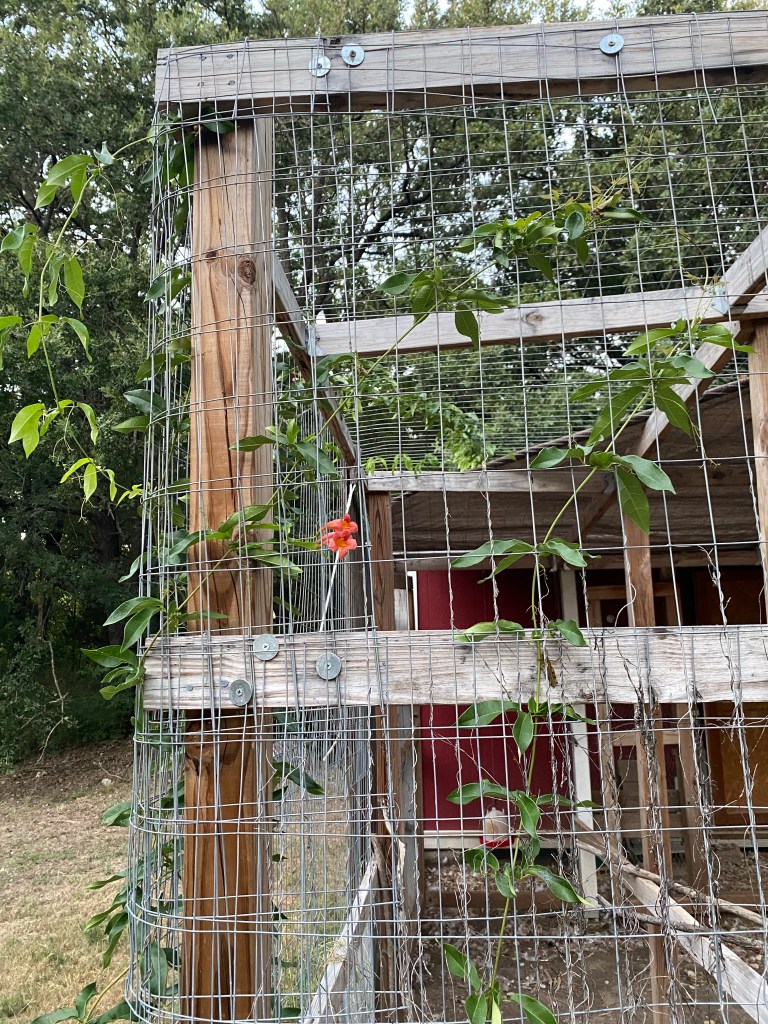
Happy Crossvine

The cross vine I planted near the coop runs is happy! It has vines climbing up on two sides of the run, and has bloomed (small orange spots in the photo). The hope is that it fills in the corner to provide shade for the chicken run and since it is in full sun (one of the few places on our property that has full sun), we hope when it is established the bloom profusion will be spectacular. There are other cross vines in the area that have an amazing display of blooms multiple times per year.

Cross vine climbing the outside of the the chicken run

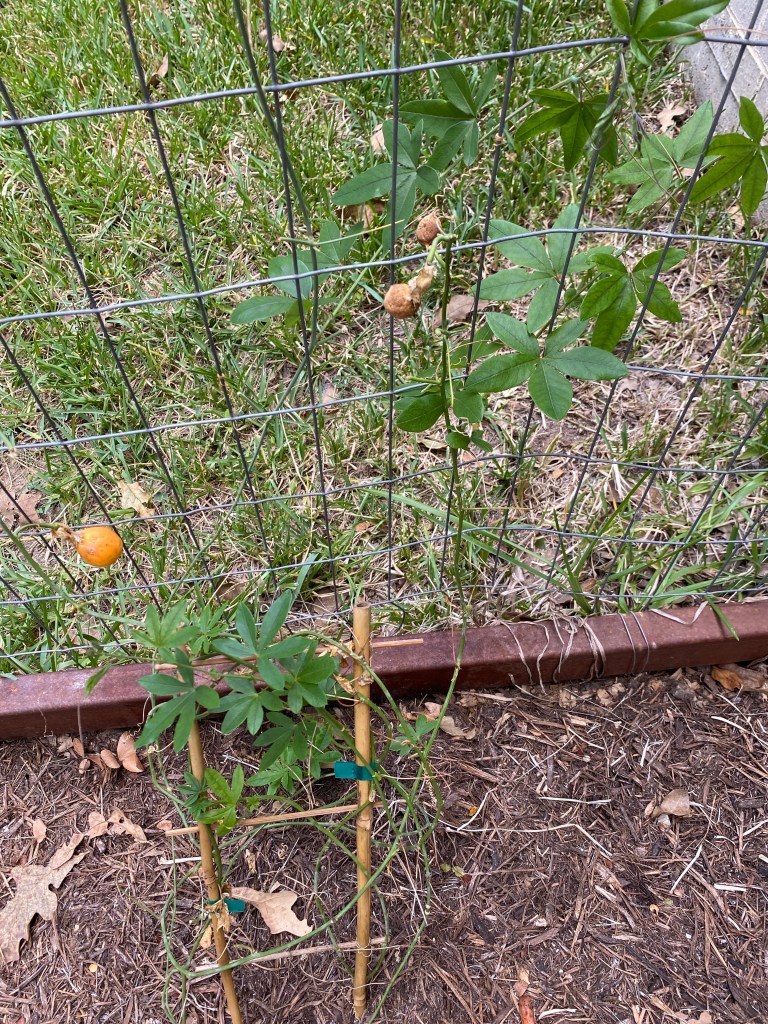
Regeneration

They have returned! After being eaten down to nothing but stems, the passion flower vines have started to grow leaves again, hurray! This time, I am going to give the plants some time to grow and fill out before I let them be butterfly host plants. I picked off the caterpillar I found, then sprayed the leaves with my diluted neem oil mixture (neem, peppermint, Castile soap). Once the plants are well established, then I’ll let up on the neem treatment so the caterpillars have delectable bits to gnaw.

Passion flower vine with new leaves