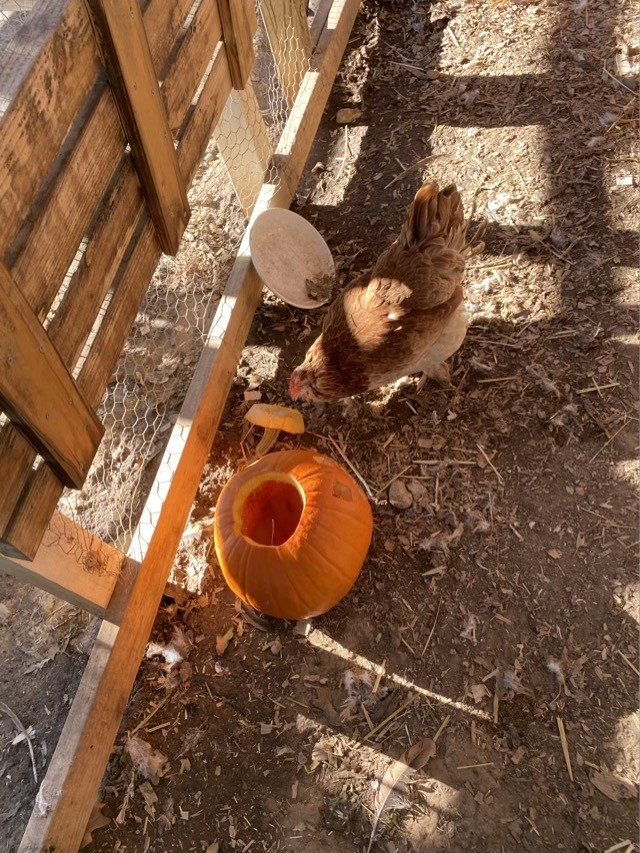
We get our pumpkins to carve jack-o-lanterns the day before Halloween, then the day after, put them out for the chickens. This is to limit mold growth and decay. I will leave the pumpkins in the runs until the chickens have pecked away what they want, then they go to the compost bin.
Photo description: Natural white pumpkin carved as a happy skull sitting on the dirt with a hen investigating.Photo description: Carved orange pumpkin with the lid removed sitting on the ground with a hen pecking at the inside of the lid.
I saw another chicken tender helping her hens carve Halloween pumpkins and loved it, so followed suit. This time, rather than poking holes, I just skimmed off the pumpkin skin in eye and mouth positions using a sharp knife.
Photo description: Small orange pie pumpkin with the skin removed in the shape of triangle eyes and a tear drop mouth.
To hang the pumpkin, I used a gimlet to drill a hole through the stem, then split the end of a bamboo stick to push cotton twine through the hole.
Photo description: In the foreground, the bit section of a gimlet on the right, and on the left the split point of a bamboo skewer. Pumpkin with cotton loop through the stem in the background
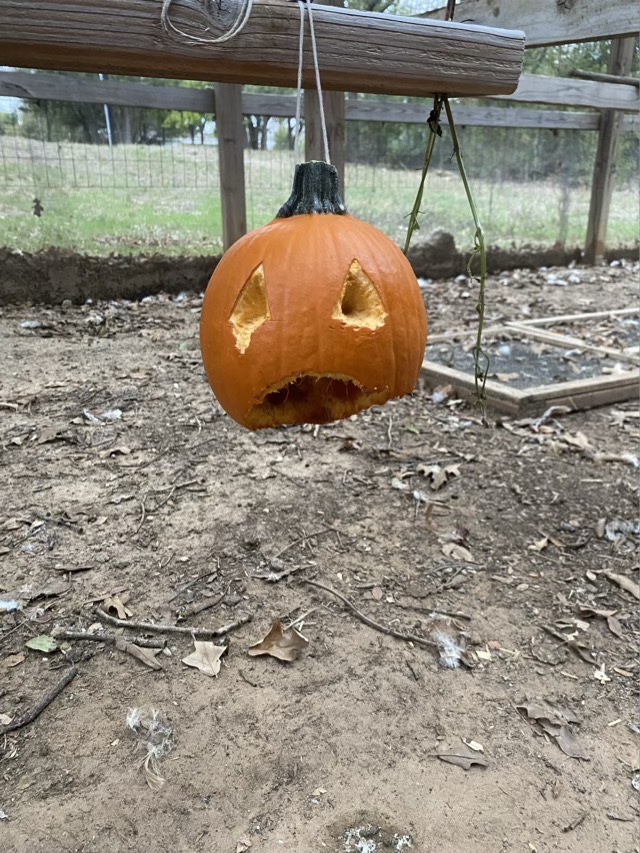
I then hung up the pumpkin in the chicken run. By the afternoon, the pumpkin had a decidedly gory countenance.
Photo description: Same pumpkin with the flesh pecked out of the eyes and the entire bottom gone, leaving a gaping hole.
We lost another chicken this week. I say lost, but she was quite easily found, just not alive. She was laying in the run when I went out to check on them. Rigor mortis was complete, so she probably passed during the night. From a quick web search rigor mortis in chickens completes within a few hours of death, and can last 8-24 hours. She was walking around and eating the day before, so sometime late evening or early morning her ticket was punched. No signs of distress or abnormalities, I did not do a necropsy since they are four years old. The other chickens are unconcerned.
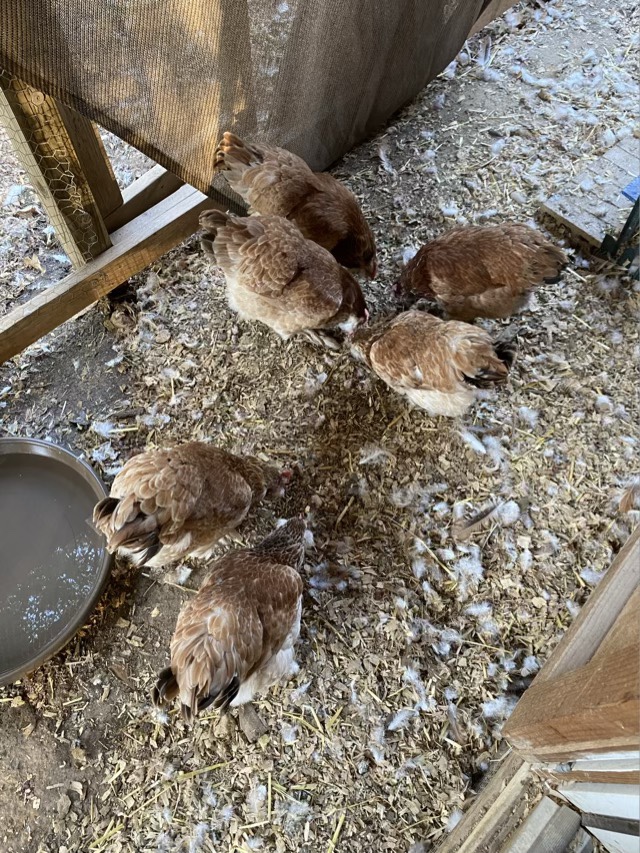
Photo Description: Six Faverolle hens in molt eating dried grubs
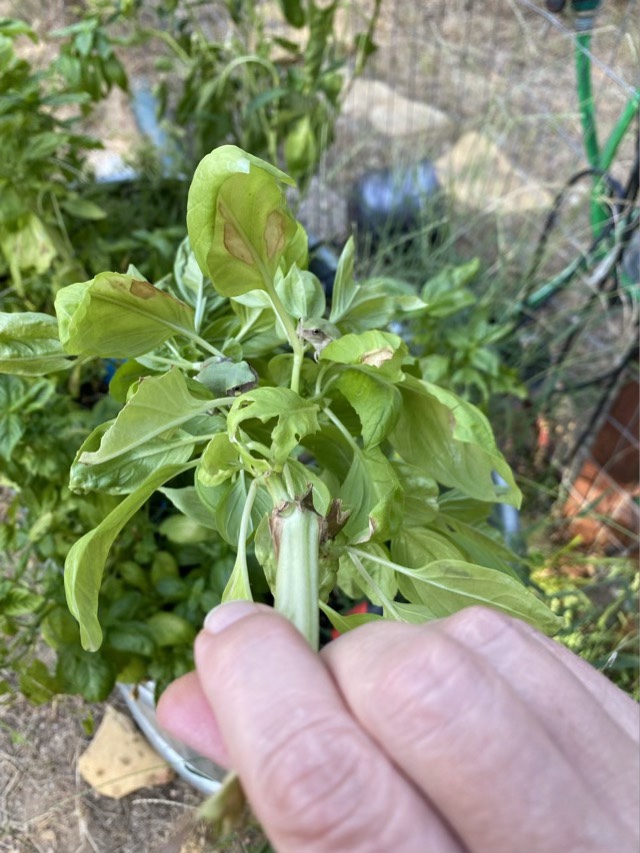
I regularly pick a stem or two of basil for my chickens. I was surprised when I snapped one off and came away with two little tree frogs. Oops! So I still have garden guardians, they are just tucked under basil leaves. I shook them back into the garden to keep guarding before taking the basil to the chickens.
Photo description: hand holding a stem of basil with two small green tree frogs nestled in the leaves.
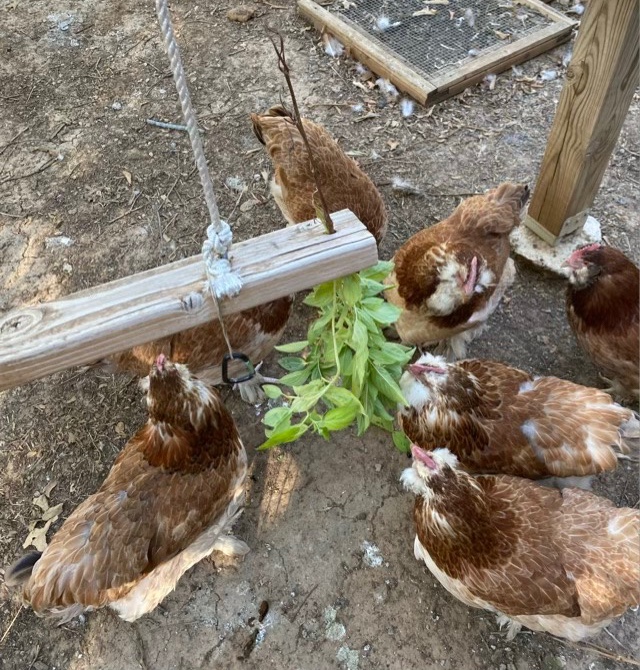
I’ve found my best way to give the chickens the basil is to wedge it in a hole in their swing. I have drilled holes in the ends of the wooden board, and I push the fresh basil up through the bottom, and an old dried stem down through the top to lock the stems in place so the hens can pull off the leaves easily.
Photo description: Fresh green basil hanging from a wood 2×4 swing, with a brown twig sticking out of a hole on top. Seven molting Faverolle hens surround the basil.
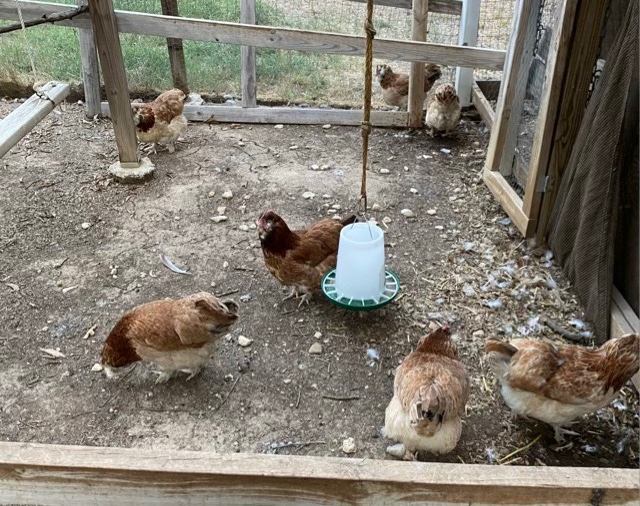
We are down to seven hens. We lost one yesterday, she died in her sleep in the coop. We noticed that she was listless and not eating that afternoon, then found her the next morning. I think it was Twilight. Most of the chickens have removed their colored leg bands, and we haven’t been able to sort out who is who. I know Seashell and Magic by sight. Schmoo still has her band. The rest have very similar coloring, and are starting their molt, so look off. I did not do a necropsy, her body was very thin, but did not look outwardly diseased. The hens are over four years old, and the average life span for laying hens is 3-7 years. They are also of questionable breeding, being hatchery birds and not from a reputable breeder of the breed. The rest of the hens will have a safe place with fresh water and food and treats until they too shuffle off this mortal coil.




 Critters and Craft