Today is National Poultry Day! Strut your stuff, ladies.
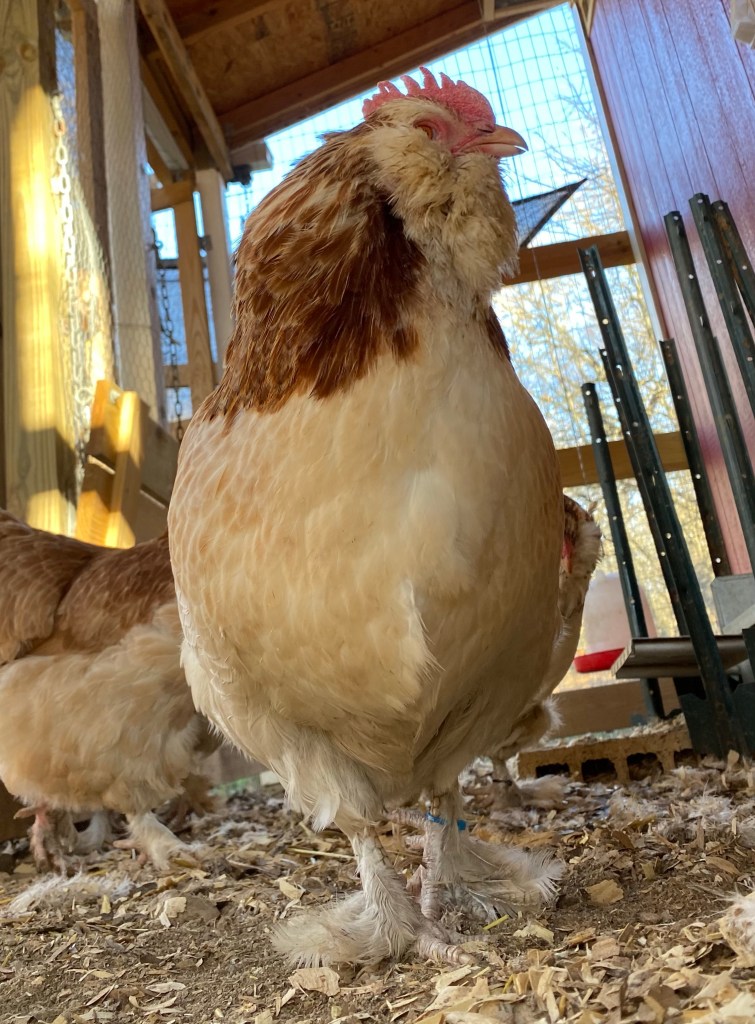
Cloud the hen walkin’ the walk
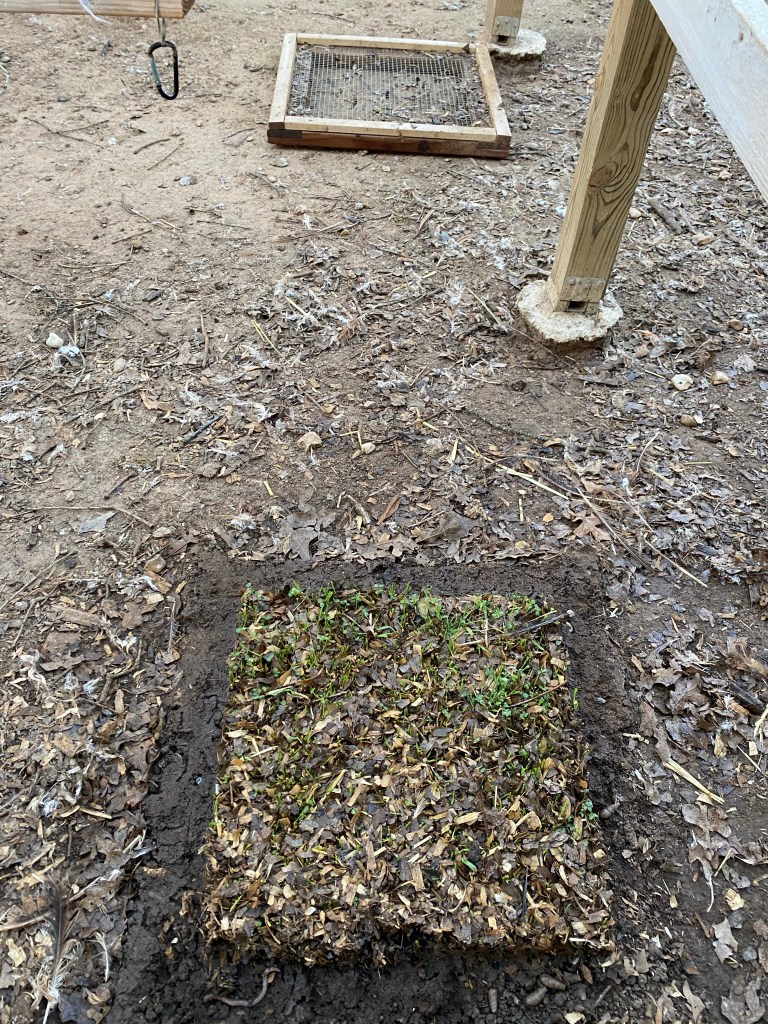
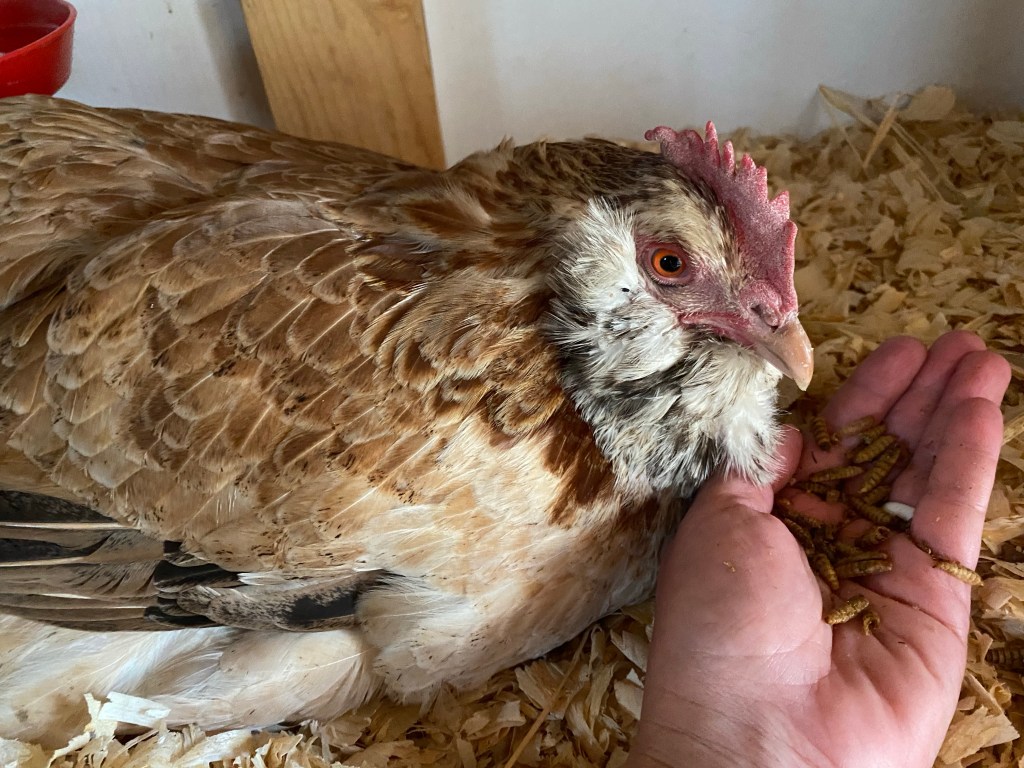
In honor of this day I moved their salad garden to a new spot and let them turn over the old plot (ok, really more of a coincidence, but it worked out well). Happy chickens. Well, except for Magic who is still in isolation unable to walk, but she has been starting to put a little more weight on her left leg and using it to shuffle a little. I suspect a sprained or broken toe, rather than a disease since the leg is not paralyzed. She lets me clean the pine shavings off her beard, like the chickens let the alpha hen do. So there we go.
Salad bar frame moved to a new location (back) and the old patch opened up (front)
Poor Magic’s foot is bothering her. I thought it was a bumble (I did the bumble surgery and removed a large lump), but typically my hens are back in their feet and moving around better after the procedure. Magic just holds the foot up pathetically, then lays down in the dirt. So she is in the isolation ward away from the bugs. She has food and water, and gets hand fed grubblies. I’m hoping some rest time will help. And if it is something else, at least she is not mingling with the flock.
Powdered eggs is going to be my go-to method of long term egg storage! My hens are laying up a storm, and I finally had an excess of eggs to try dehydrating eggs. I followed the Dirty Gourmet’s instructions (here). I hand whisked the eggs until they were slightly foamy. Five 50g eggs fit in each of my fruit leather trays (I did two trays), just like hers did. I dehydrated at 140 degrees for 10 hours, then removed all the dry bits, but had to flip over a section on each tray and dry another couple hours. At this point it was bedtime, so I put all the bits in a gallon freezer bag in the freezer. In the morning I put all 10 dehydrated eggs in my food processor and blended until it was a coarse powder.
Dehydrated egg straight from the freezer processed in the food processor
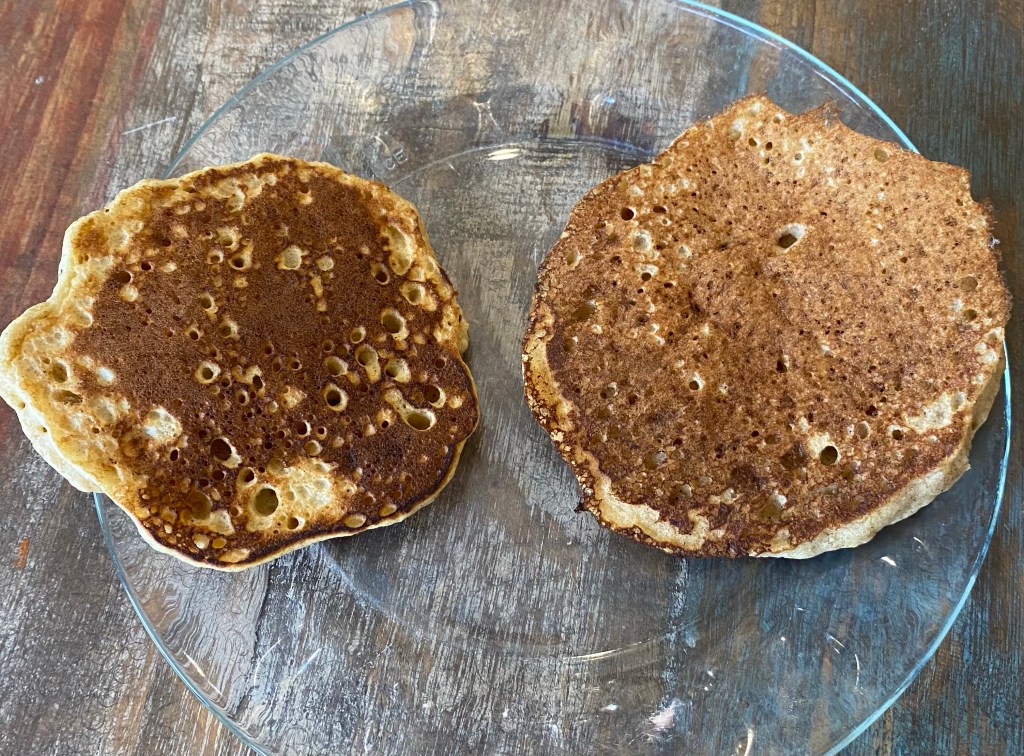
I weighed the resulting powder and figured that each egg was reduced to 12 g. The Dirty Gourmet recommends reconstituting with 1 Tablespoon and one teaspoon of water. I tried that, but the eggs were still quite thick. I weighed an egg shell (7 g) and taking the weight of the whole egg (50 g), figured that 31 g of water was lost for each egg (that is 2 Tablespoons). I used this ratio to rehydrate 3 eggs worth of powder and made two batches of pancakes, one with fresh eggs, and one with the powdered eggs. Both mixed and cooked up fine, and my family said they couldn’t taste a difference. I think the powdered eggs made a slightly finer textured pancake. The best part is that I think I can probably store 50 dehydrated eggs in a single gallon bag. I am storing the powder in the freezer as recommended, but the space savings is considerable! I think I can also comfortably process 15 eggs at a go. Maybe I won’t have to buy eggs next winter. Maybe.
Almond and oat pancakes made with fresh eggs (left) and reconstituted powdered egg (right)
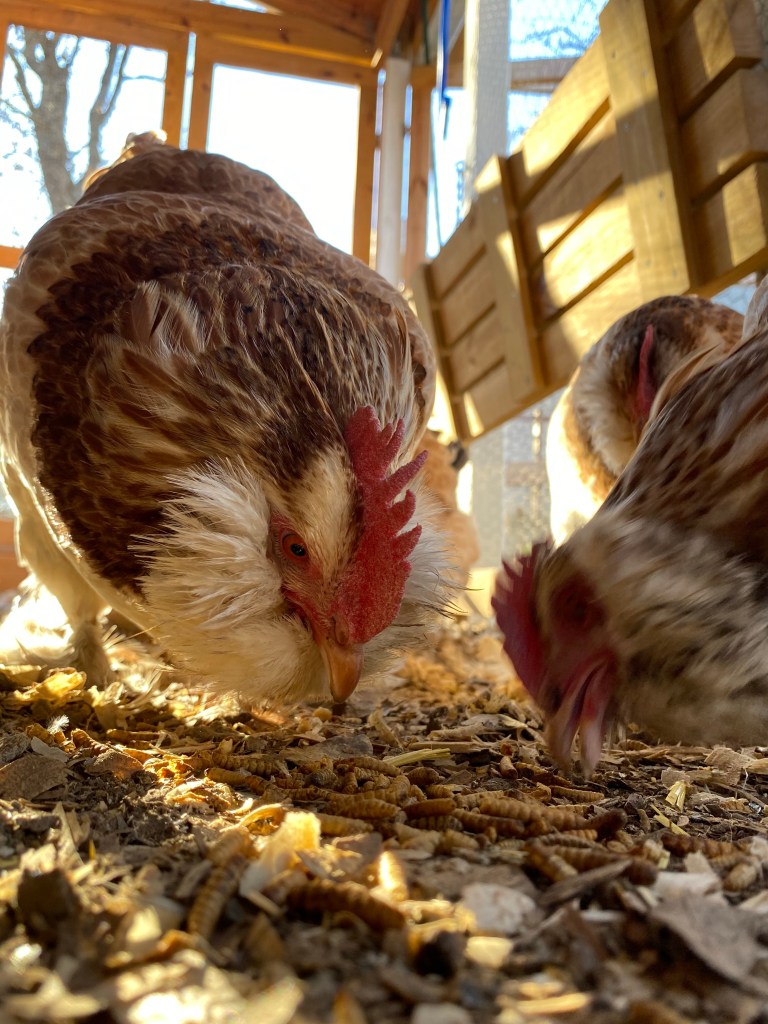
I was out in the coop because I needed some reference photos of the hens for a graphic project (results are on my other blog, here). This shot didn’t help with the drawing, but I liked the composition and unusual angle.
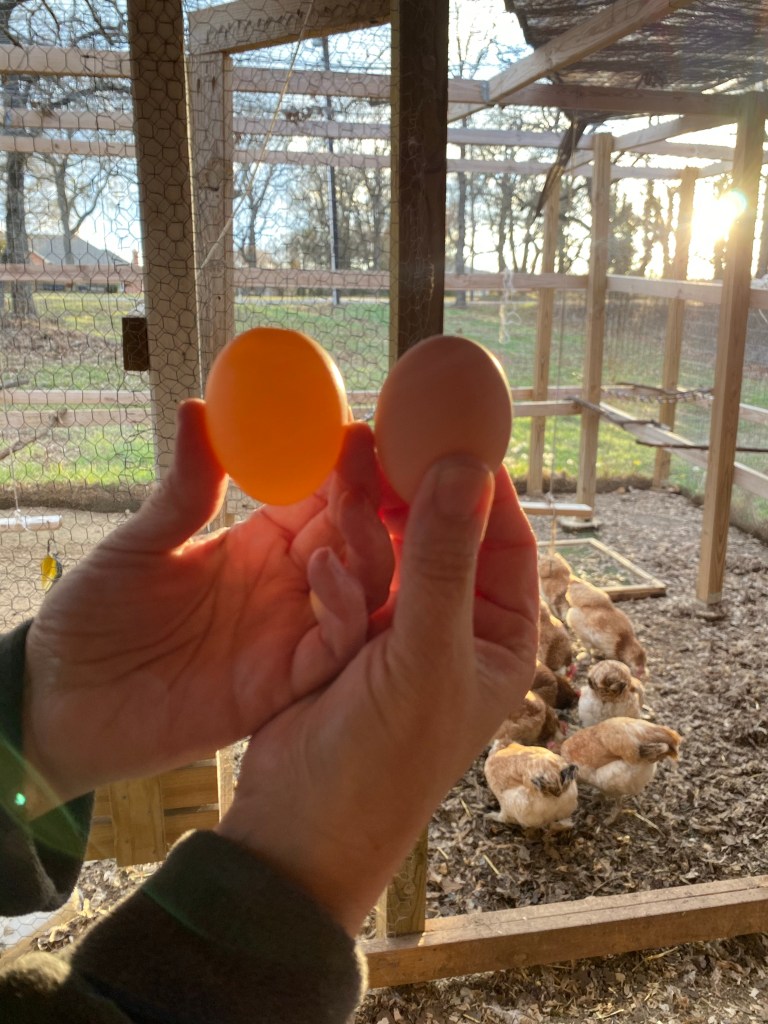
We found another shell-less egg in a nest box. My youngest was helping so I held the fragile egg and a normal egg up to the light, and she took a picture, because it was neat to see the transparency of the odd egg. I say the egg was shell-less, but it did have a very thin layer of hardened material, then a thick membrane. Touching it caused a dent, but then gently rolling it in my fingers didn’t break the egg and made it look more like a fluid-filled latex balloon. I weighed it and recorded it in the book, then we gave it to the dogs. Griffin was quite surprised when he picked up the egg and left most of it behind! Missy didn’t mind cleaning up.
Shell-less egg compared to a normal egg in the light


 Critters and Craft