Disarming spider webs

When the summer heat starts to dissipate somewhat in the early evening, I open all the people doors in our coop to let the breeze through and bring the temperature down. Then before I head to bed I close the doors up again to protect the hens from late night predators. The worst part of walking around the outside of the coop at night is running into a face full of spider web. To say I make strange noises when suddenly draped with sticky gossamer threads is putting it mildly. So I have learned, finally, to use a flashlight to see the webs before I envelope myself, and how to disarm the trap so I can pass by.

Late night spider and web

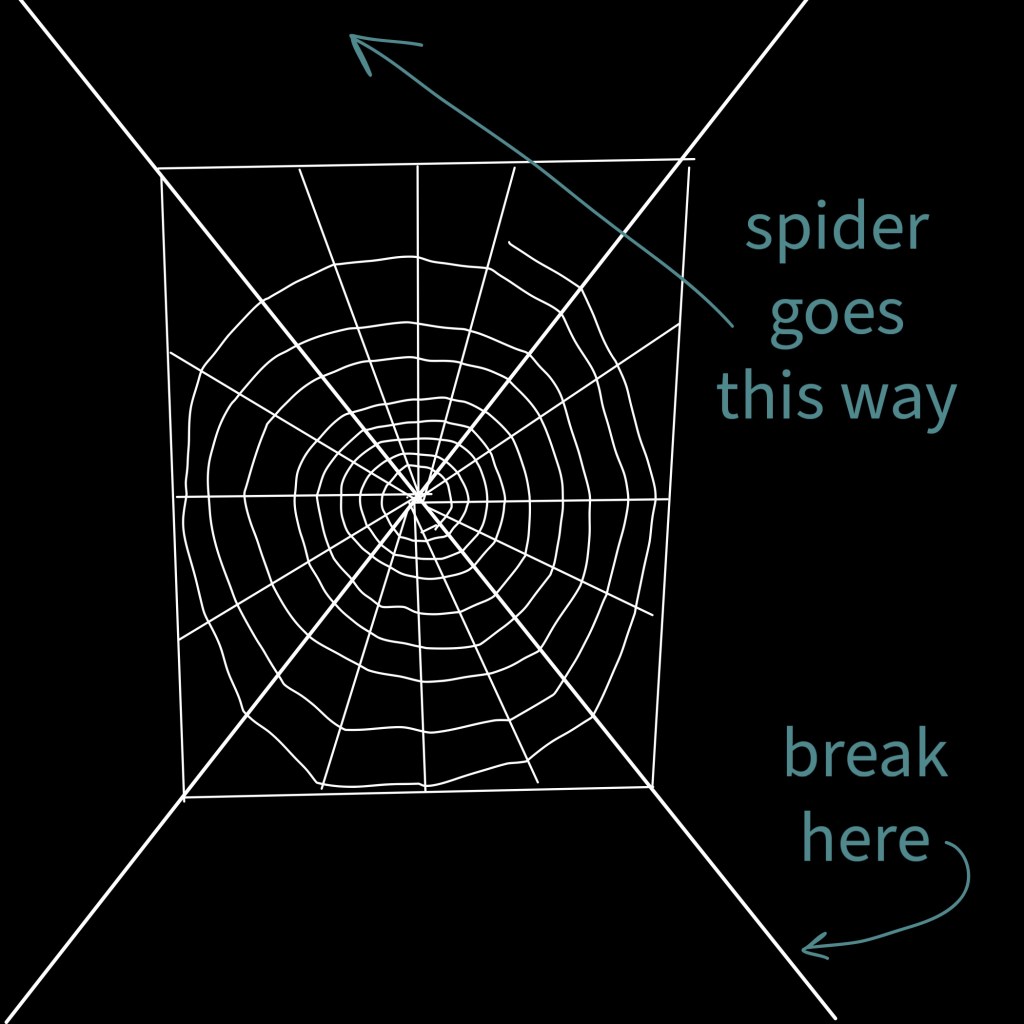
The webs spread across paths usually have three or four anchor points. It is amazing how these eight-legged critters establish the anchor lines as they drift around on the breeze, and equally wonderful that if you break one of the lines, the web collapses and the spider moves in the opposite direction. Away from the break and that which broke it! No spiders in my hair or crawling up my arm, no web across the path or on my skin, and eventually they stop setting up shop in that spot. This method of disarming also looks much more dignified than waving a stick in front of you as you walk, like a deranged wizard.
Melon

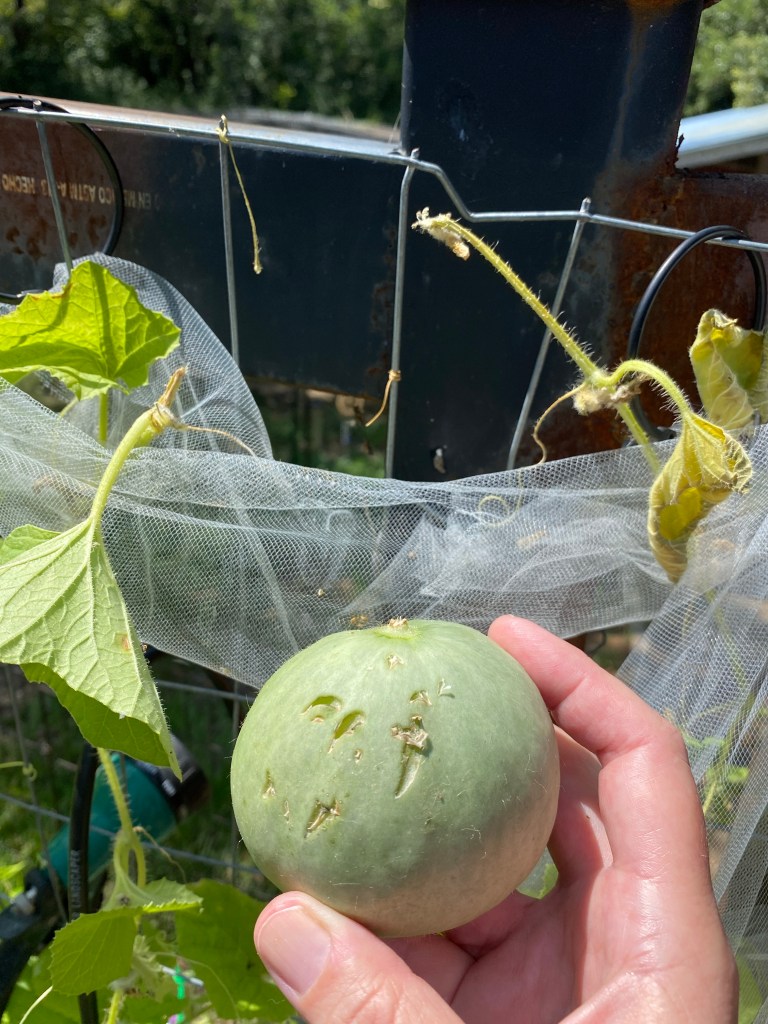
I went to check my container garden and to my horror saw one of the melons laying on the ground, broken off the vine. Absolutely not ripe or ready. It had suspicious claw or maybe teeth marks. Hm. This melon was the closest to the top of the fence and I can imagine an enterprising raccoon or squirrel trying to abscond with the fruit. Or a curious cat deciding it was a play thing (most likely). Once the orb fell into the yard, I imagine the risk was not worth the reward. I did have it in a netting sling, but it was not as protected as the other melons. We’ll see if any of the others make it to fruition.

Unripe melon with suspicious claw marks

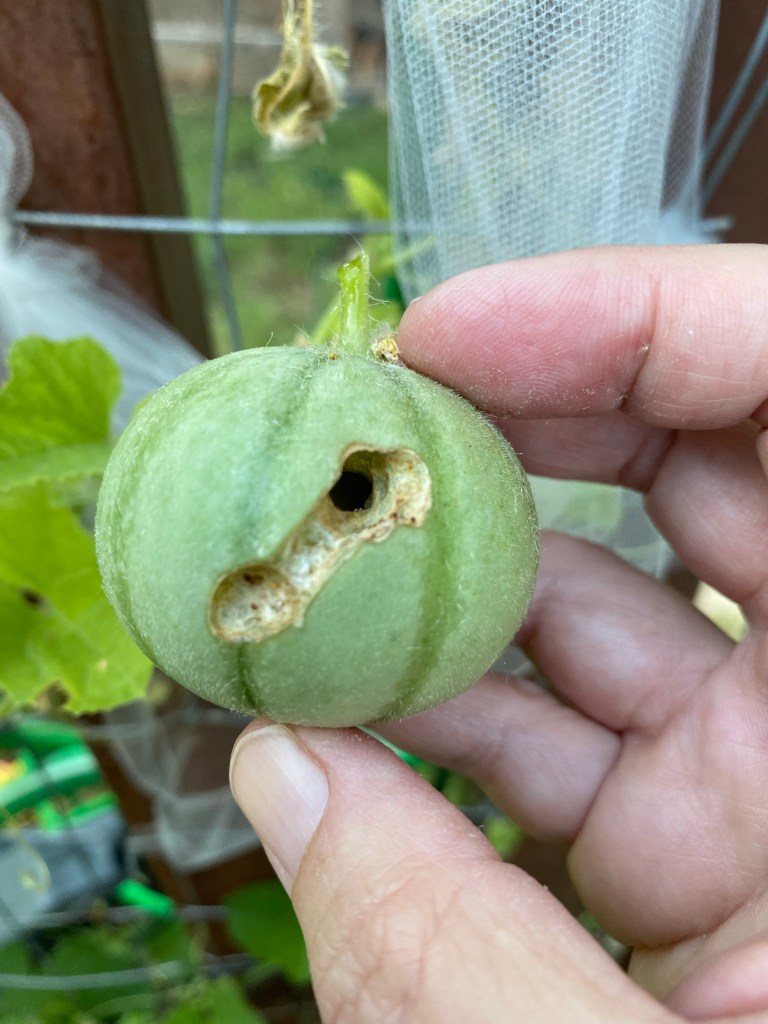
So after writing this post, I investigated my remaining two melons and discovered a gaping hole eaten into one of the unripe fruits. Sigh. Maybe the last melon will make it.

Some thing ate my melon

Bug day

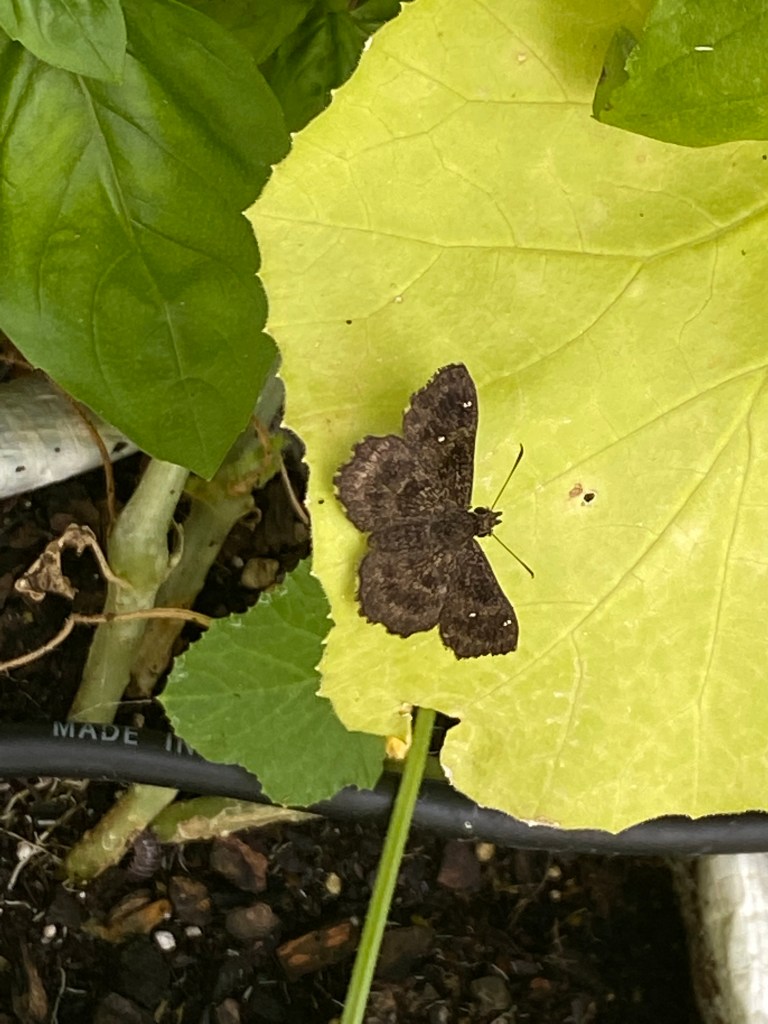
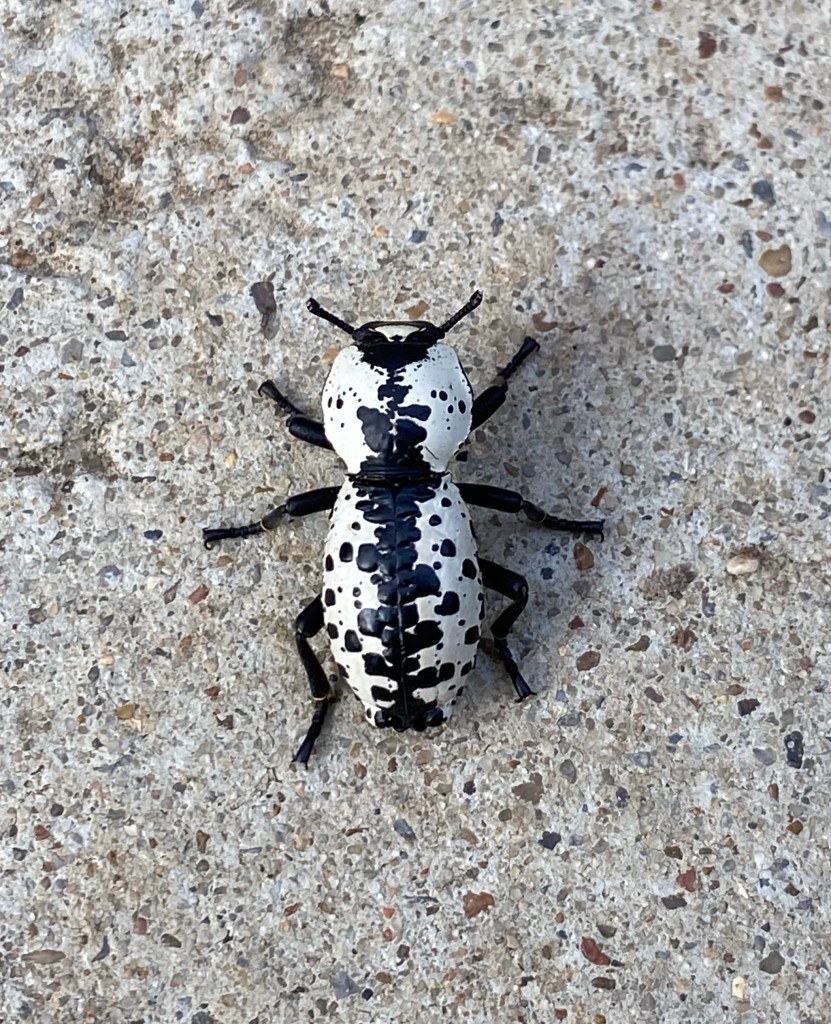
It is fascinating how the world works in ebbs and flows. I recently had a bug day, where I saw more photo-worthy bugs in one day than I had in two weeks. Was I a little more alert that day? Was I thinking more than usual about bugs? Did catching bugs in Animal Crossing bleed over into the real world? Or where there just more bugs out where I could see them? I’m not sure the answer, but I will share the photographic fruit.

Scalloped wing butterfly on a melon vine leaf
Common Green June Beetle in an unusual position
Texas Ironclad Beetle. Second one in a month!! Yay!

Crepes

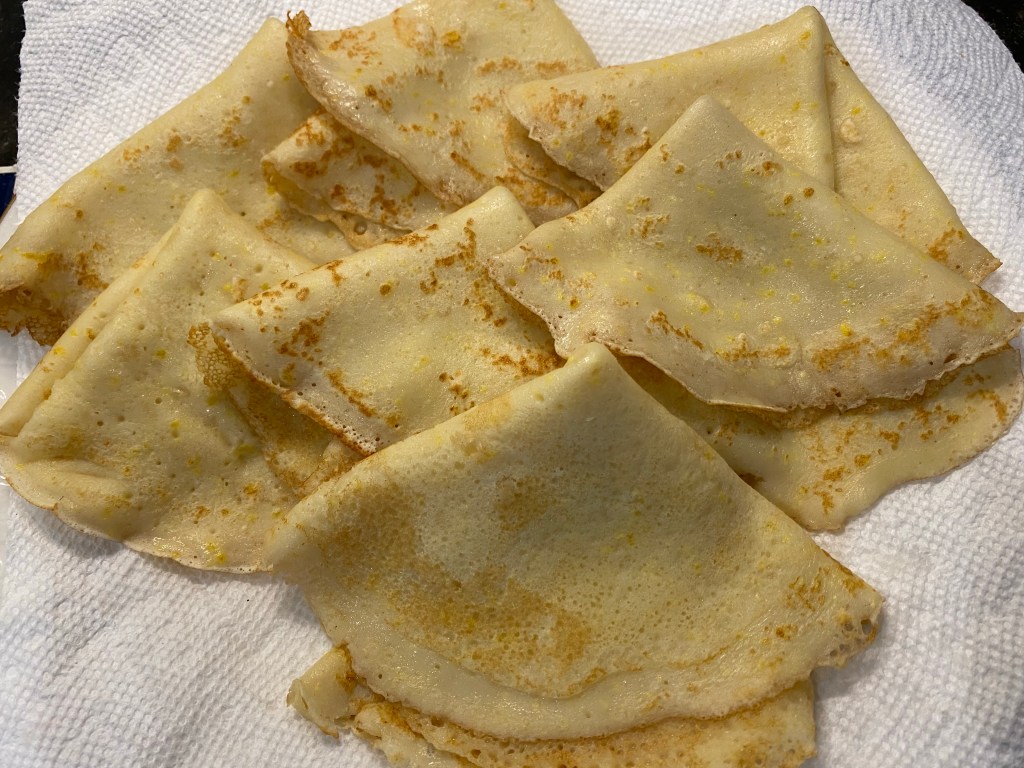
The hens are slowing down on laying eggs in the heat of the summer. I still get one to three eggs a day, but I thought I would get out the powdered eggs from the freezer and see how they do in crepes with my Heritage Wheat flour! Spoiler alert, the crepes come out well.

Crepes made with powdered eggs and Heritage wheat
  • 20 g powdered egg
  • 4 Tbsp water
  • 1 1/2 cups milk
  • 1 cup Sunrise Mills Heritage White Flour
  • 1 Tbsp vegetable oil
  • 1/4 tsp salt
  • Melted butter

Combine the powdered egg and water and let sit for about 10 minutes (I start this, then gather all my supplies, melt the butter, and preheat the pan to medium). Add the milk, flour, oil and salt and whisk until combined. Brush melted butter onto the hot skillet, then pour 2-4 tablespoons of batter into the pan (depending on the size of your pan) and quickly rotate the skillet to distribute the batter evenly. Cook until the edges are slightly golden and the crepe is easy to lift, then flip it and cook for a few more seconds. Fold the crepe in half, then in fourths and transfer to a paper towel lined plate.

Owl fly

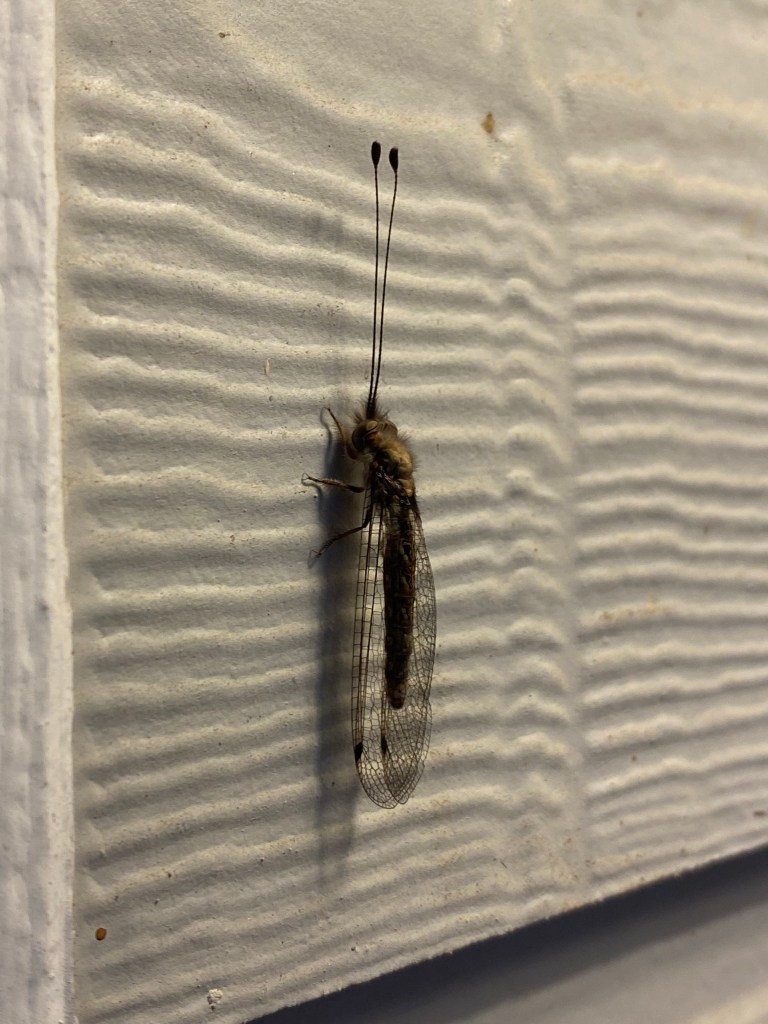
What has the antenna of a butterfly, eyes of a house fly, wings of a dragonfly, and rests like a damselfly? (I guess I gave it away in the title, huh?) I have never seen an owl fly before. This one was resting on the wall of the house under the light when I went out for my morning walk. iNaturalist gave me the ID, and internet research tells me they are predators of flying insects and are often mistaken for dragonflies. Hm. Maybe I have seen one before, then. How easy is it to see those distinctive antenna in flight?