Trying a new ID method

I put the Wyze camera where we could see the popular nest boxes. It is neat because we can see the chickens in the nests, but the angle does not make seeing their colored leg bands easy (or even possible).
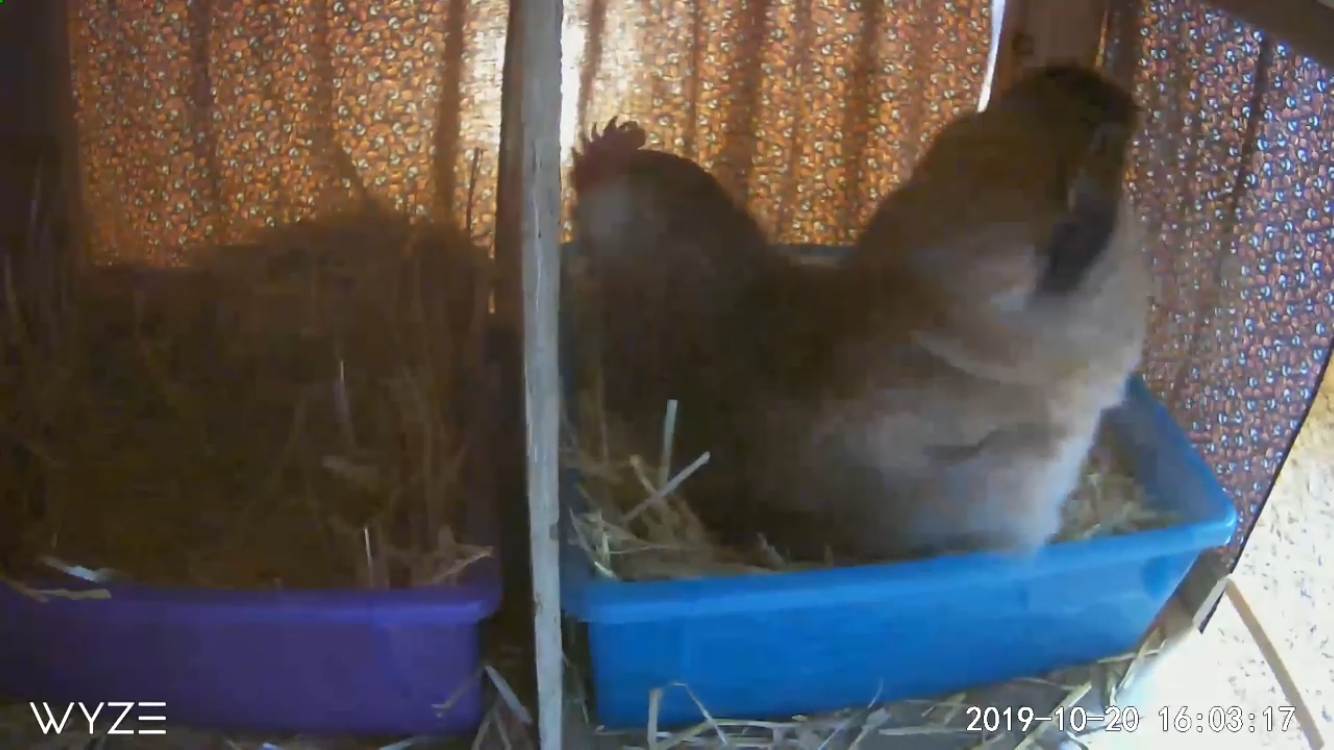
Jade getting settled into the nest

So we are trying a new method of chicken identification, at least for the purposes of figuring out who was on the nest when. I took pictures of all their combs, which are all slightly different. (Scientists identify orca whales in a similar way; by taking pictures of their dorsal fins.) Trying to get a clear picture of the comb when they are wiggly and their head is rarely still was a challenge, but eventually I figured out to tuck the subject under my arm and angle my phone camera back toward their head. I then used Adobe Lightroom to adjust the photos and get the combs all facing the same way.
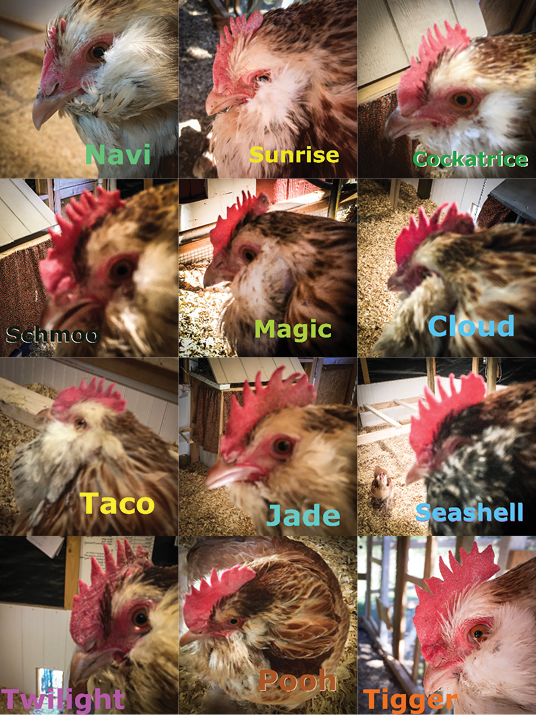
I printed a reference sheet and then checked the camera. I think this is a viable method! I was able match Jade’s comb with the reference. Not sure how much time I will spend going through the saved footage to figure out who laid what egg, but it might be helpful if I have an off egg and need to figure out the culprit.
Daddio

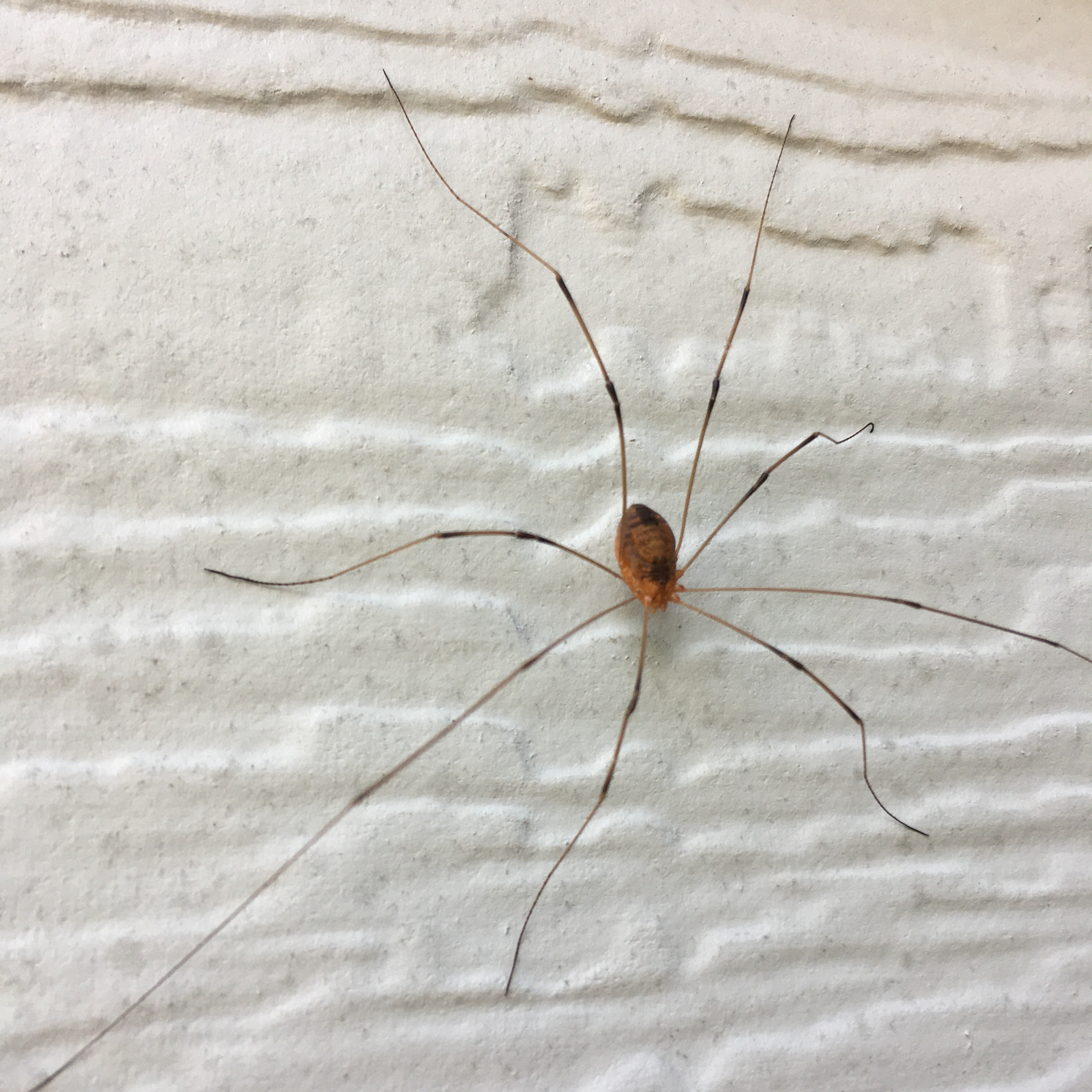
Daddy long legs, aka harvestman

I grew up calling these arachnids “Daddy Long Legs”. This bad boy is about six inches from leg tip to leg tip and one of the largest I’ve seen (they grow them big in Texas). I plugged the photo into iNaturalist and their algorithms gave me the order of Phalangida. Wikipedia says the order is now called Opiliones and are also known as harvestmen (which seems much more sinister to me than daddy long legs, but maybe I watched too many old horror flicks as a teen). The Wikipedia article (https://en.m.wikipedia.org/wiki/Opiliones) is quite detailed and may seed some more nightmares, even though these guys are harmless to humans.

For reference, the siding is 6.5” top to bottom

Health check

We did a health check recently and from the look of the hen’s vents, we think everyone except Navi and Cockatrice are now laying. Navi has finally gained some weight, but if we let her out of isolation for even parts of the day her crop gets large and squishy. We have decided to go for quality of life and are letting her run with the flock. If she gets lethargic and won’t eat, we’ll put her back in isolation with copper sulfate water.

Magic lost her colored band for awhile, but we made sure it was her and put the band back on. However it does look like she lost weight, so either we mixed up chickens or we need to keep an eye on her too. Seeing as how she was the heaviest chicken last month, and is still the heaviest chicken, I don’t think we have a chicken identity crisis.

They like it!

They don’t like it as much as the other nest boxes, but I found a chicken in the metal nest box! And she laid an egg there! Cleaning and painting it was not a wasted effort, yay! Granted, their two favorite nest boxes were both occupied.

I spy a chicken!

I have been putting down plastic bins everywhere I find an egg on the floor. We are up to 6 nest boxes. For 12 chickens. A little overkill, but they fight over the two boxes under the workbench. Here is a video: https://youtu.be/6hDRHzRU3fQ. I thought Velociraptors were eating my chickens; no, it was just a hen screaming at another hen coming toward her nest box.

New onion experiment

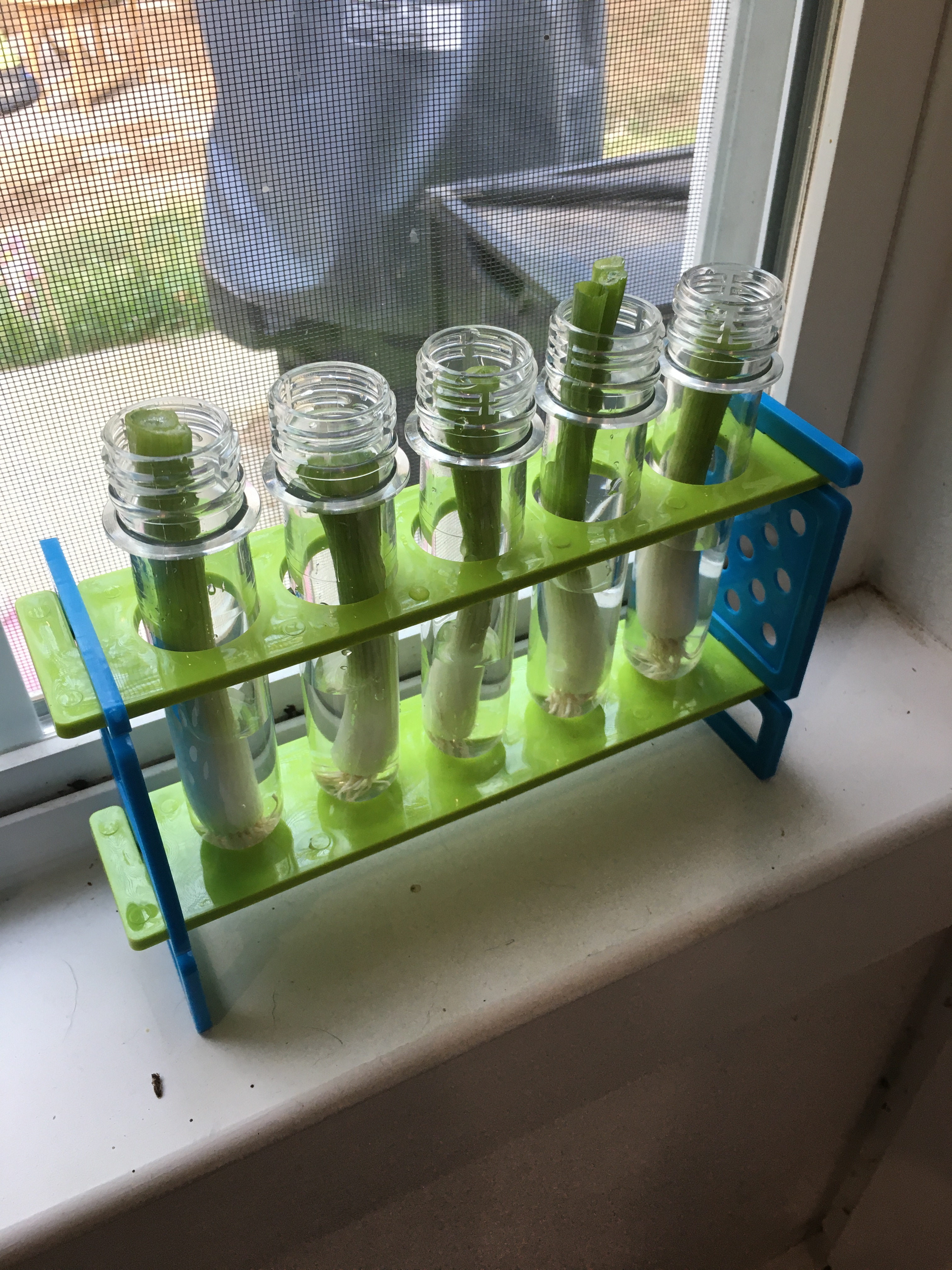
We harvested the greens from the green onions in a baggie in the window, and it worked so well, we are trying a new setup with onions in test tubes.

Green onions in test tubes

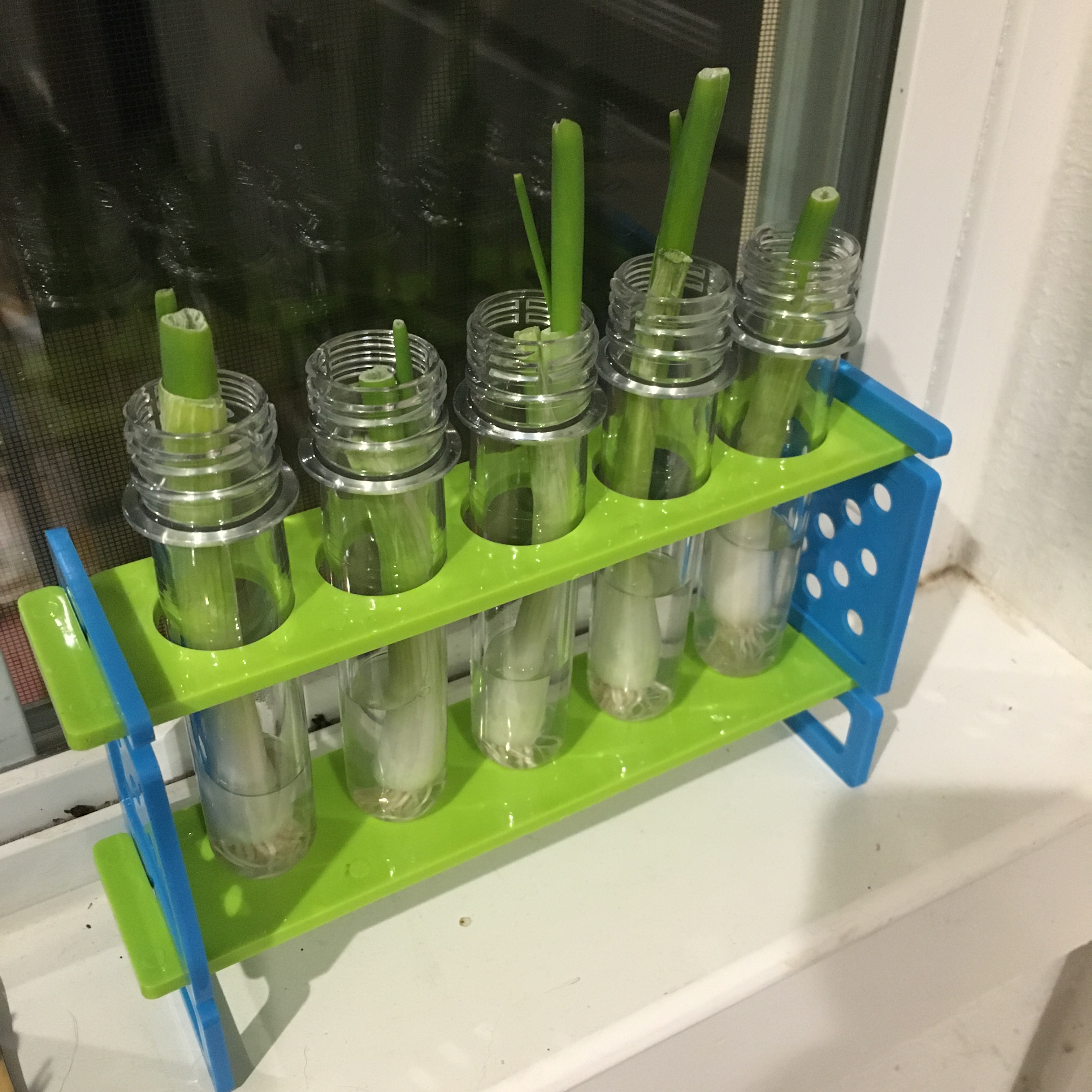
I ordered a set of plastic test tubes and a test tube rack through Amazon. I chose the plastic because there is a good possibility of the cat walking on the window sill and knocking it over. We cut off (and used) the green parts of the onion (which my eldest likes best anyway) and put the white part and roots in the test tube, then filled the water just to cover the white part. The idea is that we harvest the greens when they are long enough. After three days, we are already seeing growth!

Green onions growing in test tubes