The debate is over

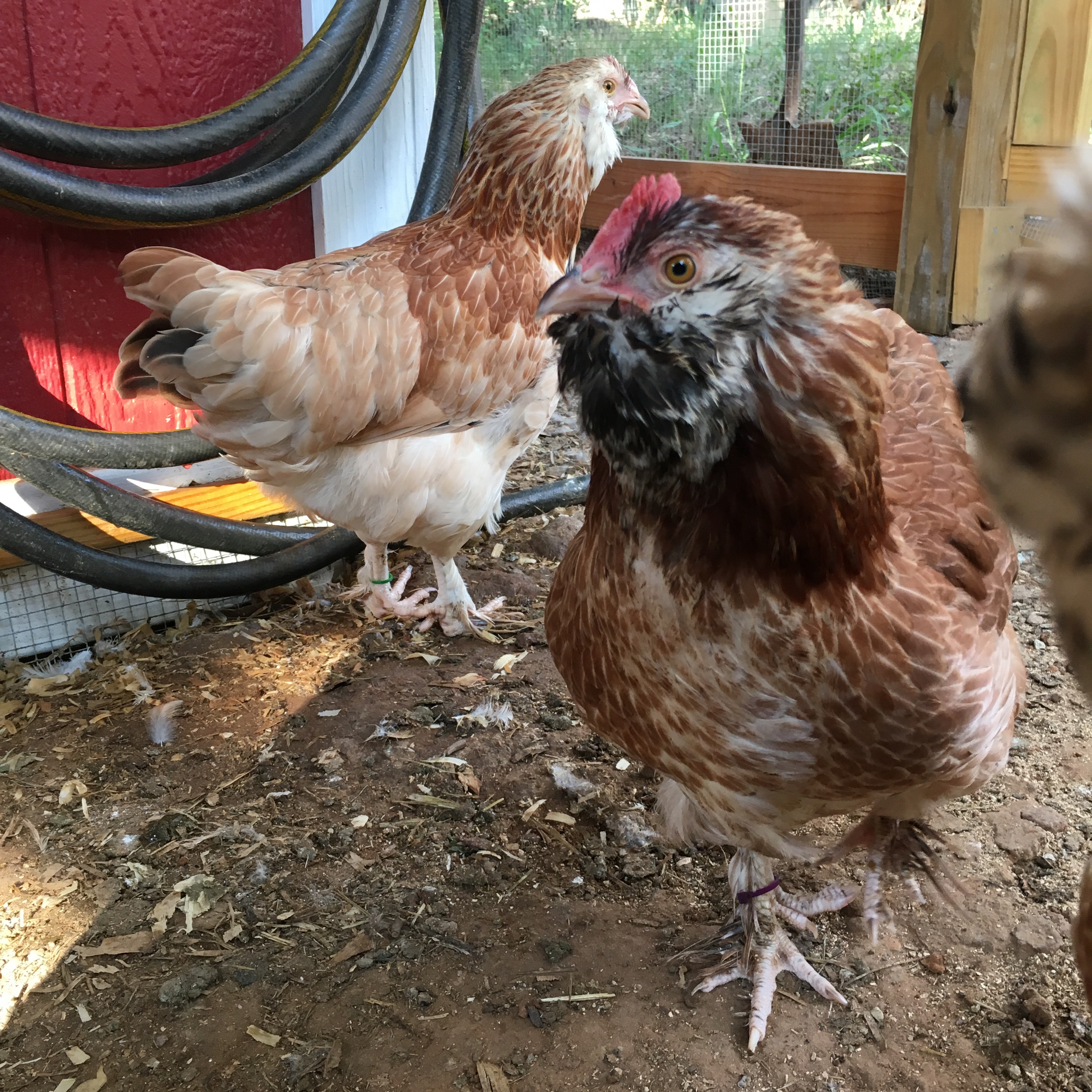
Seashell retains her name.
Cloud and Seashell

The debate on the presence of cockerels in my flock has been definitively ended. I finally found an active Faverolle group and posted the above picture with the question. Seashell is a pullet. Dark in color, but definitely female. (Young male Faverolles look much, much different which makes it easier to sex them young.)

I must admit that I am a bit disappointed; I really did want one roo. It also brings into question the direction of the flock. If we do want to breed Faverolles for show, we would need to obtain a breeder quality rooster (our chickens are, as I was informed, typically hatchery quality, which is not surprising). Now after poring over the group page, I think several girls have potential, at least in regards to their toes and foot feathers, and maybe with coloring. But do we want to show? Do we want to raise more chickens for meat or just enjoy these girls’ eggs?

Speaking of eggs, one breeder reports that her pullets start laying on average at around 8 months old. That would put us into December. But when all 12 do start laying, oh boy, are we going to have a lot of eggs.
First nesting box attempt

The chickens are over 16 weeks old now, and even though they are a large breed (adult female Faverolles can be 6+ pounds), so will probably lay later, and they have started to molt, so will probably lay later, I felt remiss about not having some kind of nesting box. Just in case.

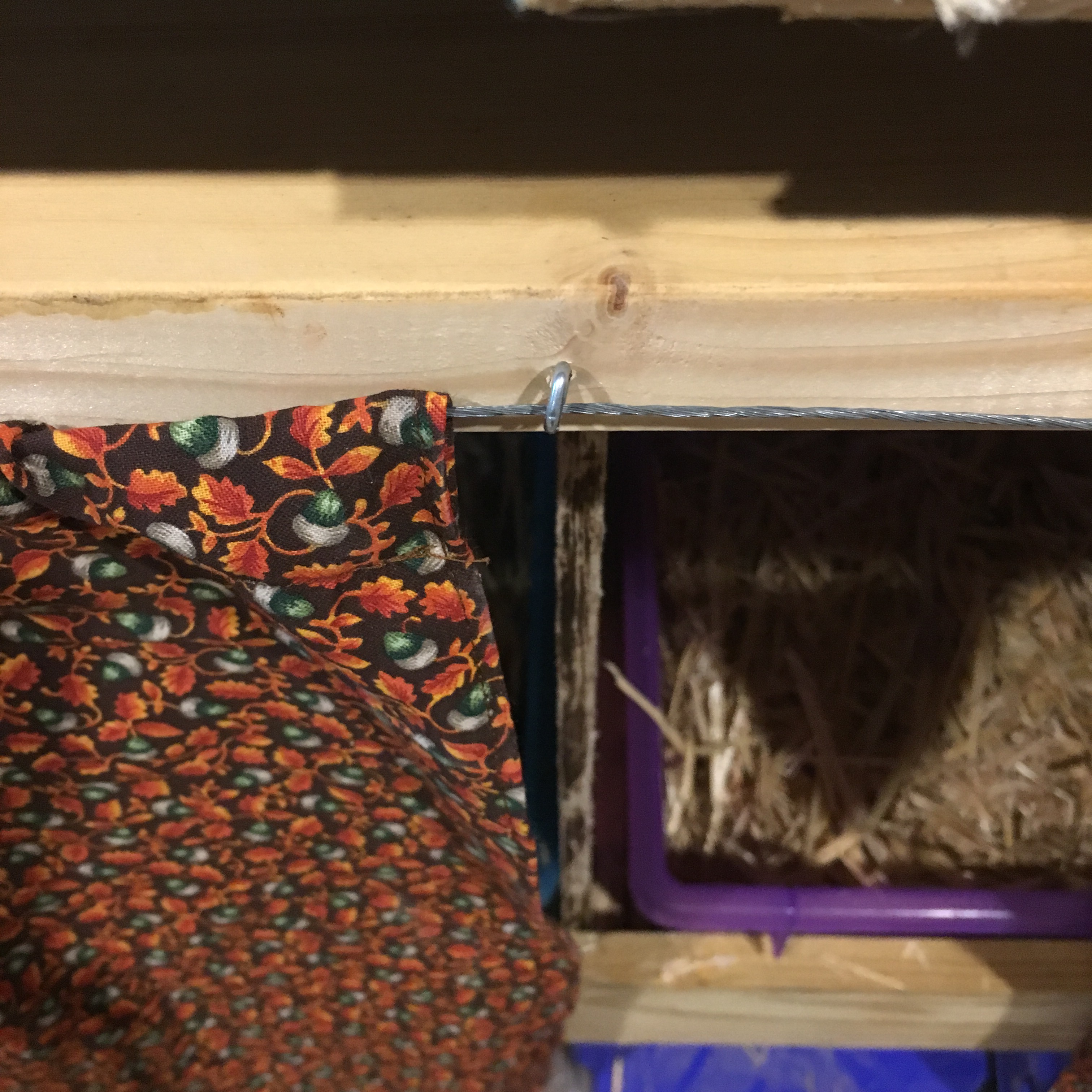
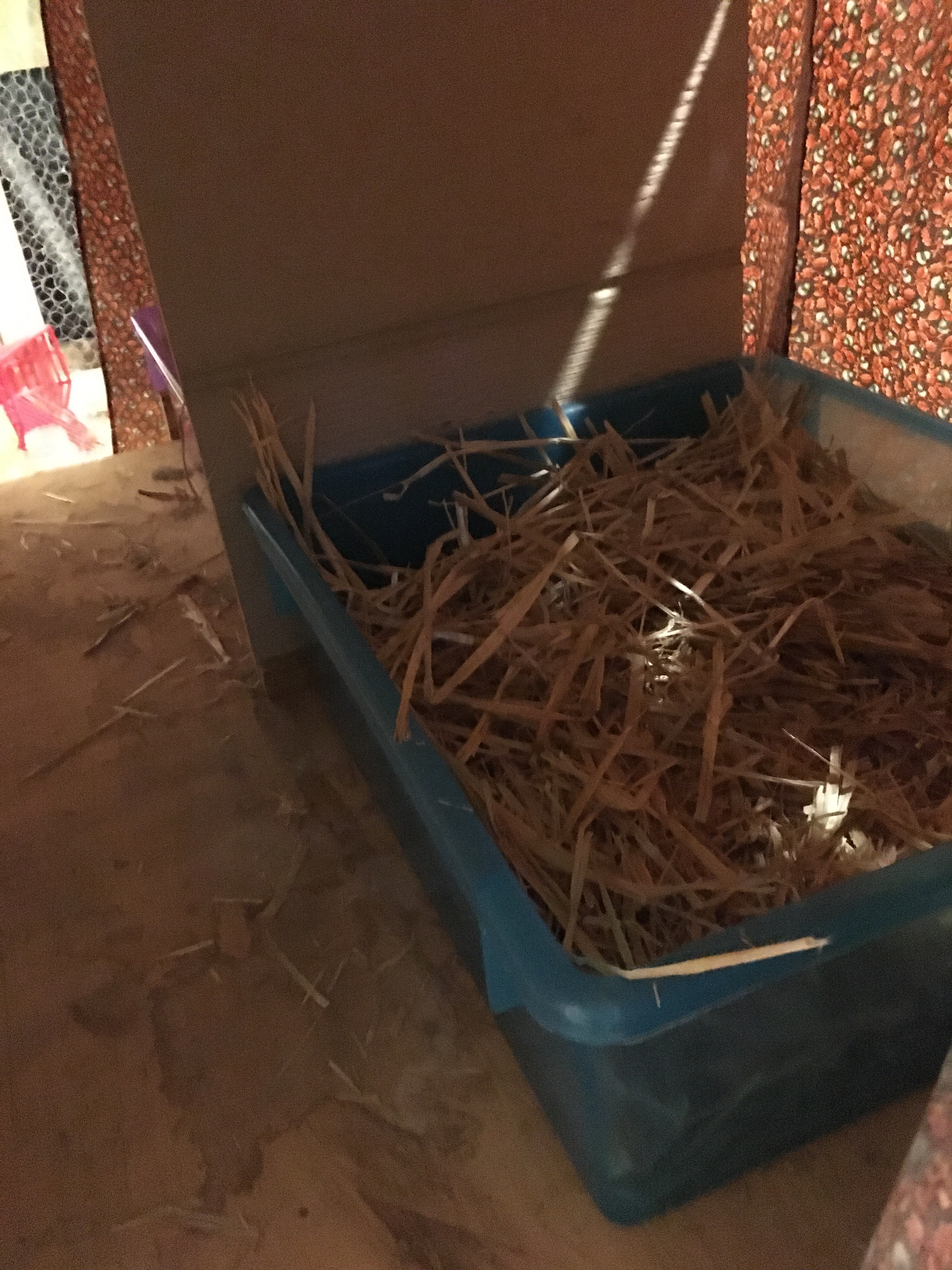
Looking inside one nesting box

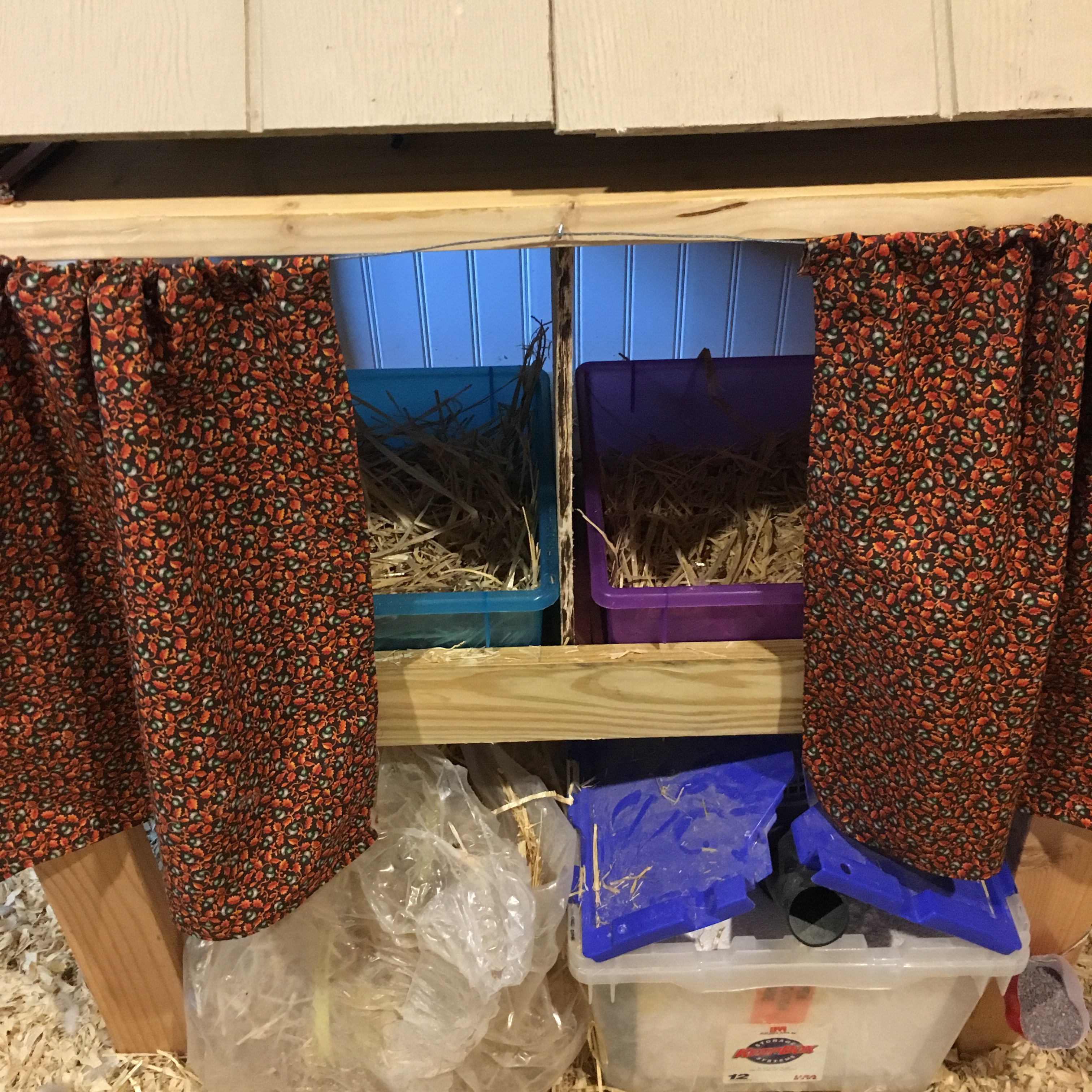
So I used the plastic bins from an old kid’s storage set (given to me by a friend!), and set them up on the shelf of my work table. It was always my plan to set up the nesting boxes here; I just modified the original plan slightly to make use of the plastic bins. I put some wooden ledges in to keep the boxes from accidentally getting knocked off the shelf, and added a hard divider made of scrap siding to separate the two nest boxes.

Hard divider between the nest boxes

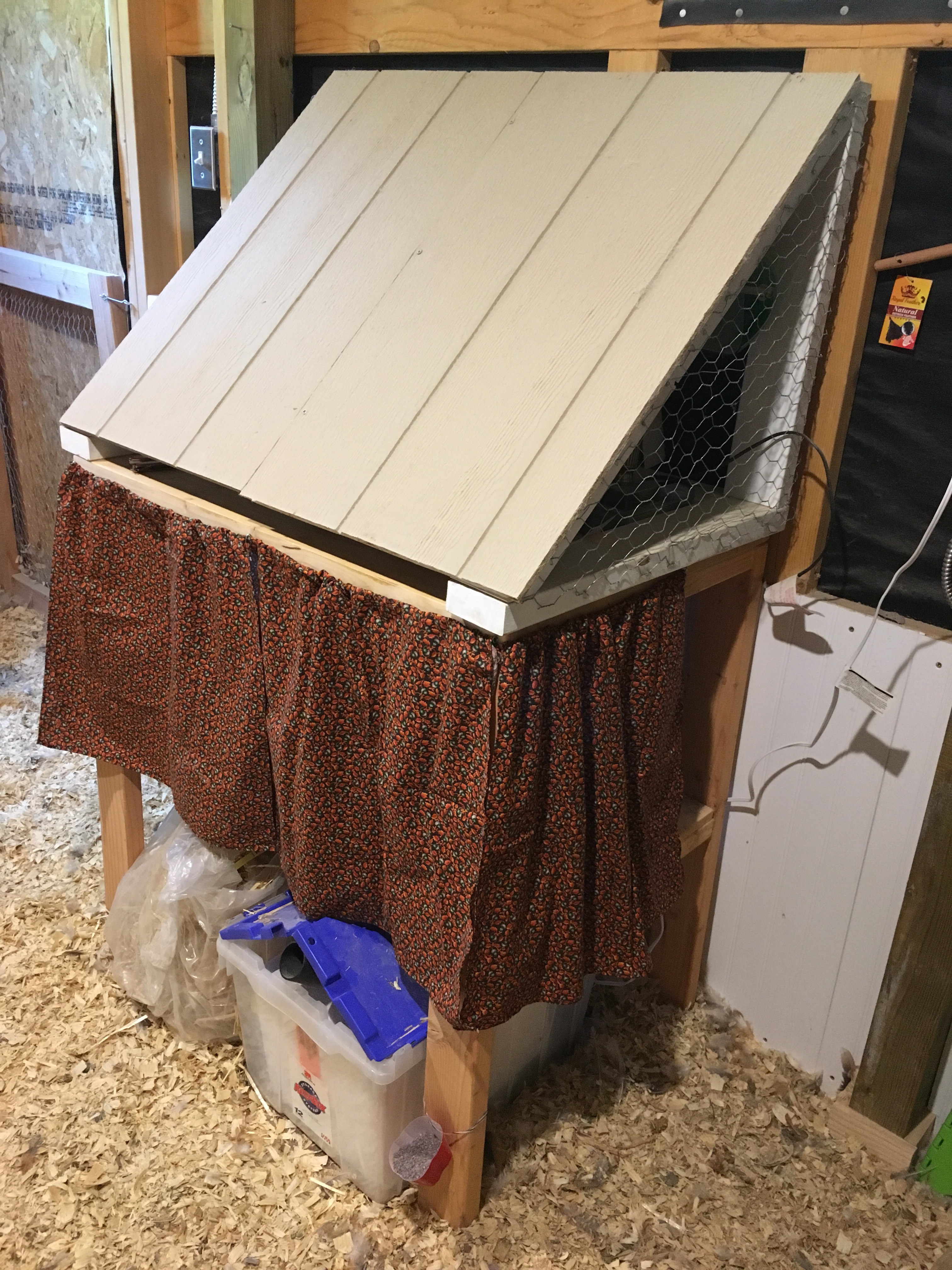
Because the weather gets hot here in Texas, I worry about hard-sided nesting boxes, especially as I wanted my nesting boxes to open to the wall, rather than into the room (as recommended in Storey’s Guide to Raising Chickens). So I sewed some curtains to go around the nest boxes. I used cotton with a dark print to keep the light out but still let the air circulate. I used picture frame wire (twisted steel cable) and screw eyes to hang the curtains. I am hoping this will make the area dark enough for the chickens, but easy for us to reach in and gather eggs.

Curtains hung on steel cable threaded through screw eyes
Outside view of nesting area, with access near the wall

The chickens were eye-balling the area, but no one was actually getting up there, so I added small perches to the entrances.

Perches made of 1×2 and leftover dowels

Since it looks like I may have 11 or 12 hens, I should have one more nesting box. I’m thinking on what I will try next.

Be different

I was recently at a very showy popular center for entertainment with highly tended grounds and a definite color scheme. It made my heart happy to see this rogue pink flower amongst the sea of white. If we were all the same, it would be a dull world indeed.

Grandpa’s Feeder

I bought a Grandpa’s Feeder awhile ago for the chickens, then found out they weren’t big enough to operate the opener yet. So it sat in its box for a couple months. Now at well over two pounds they are big enough! (They really only had to be 14 ounces. Oops.)

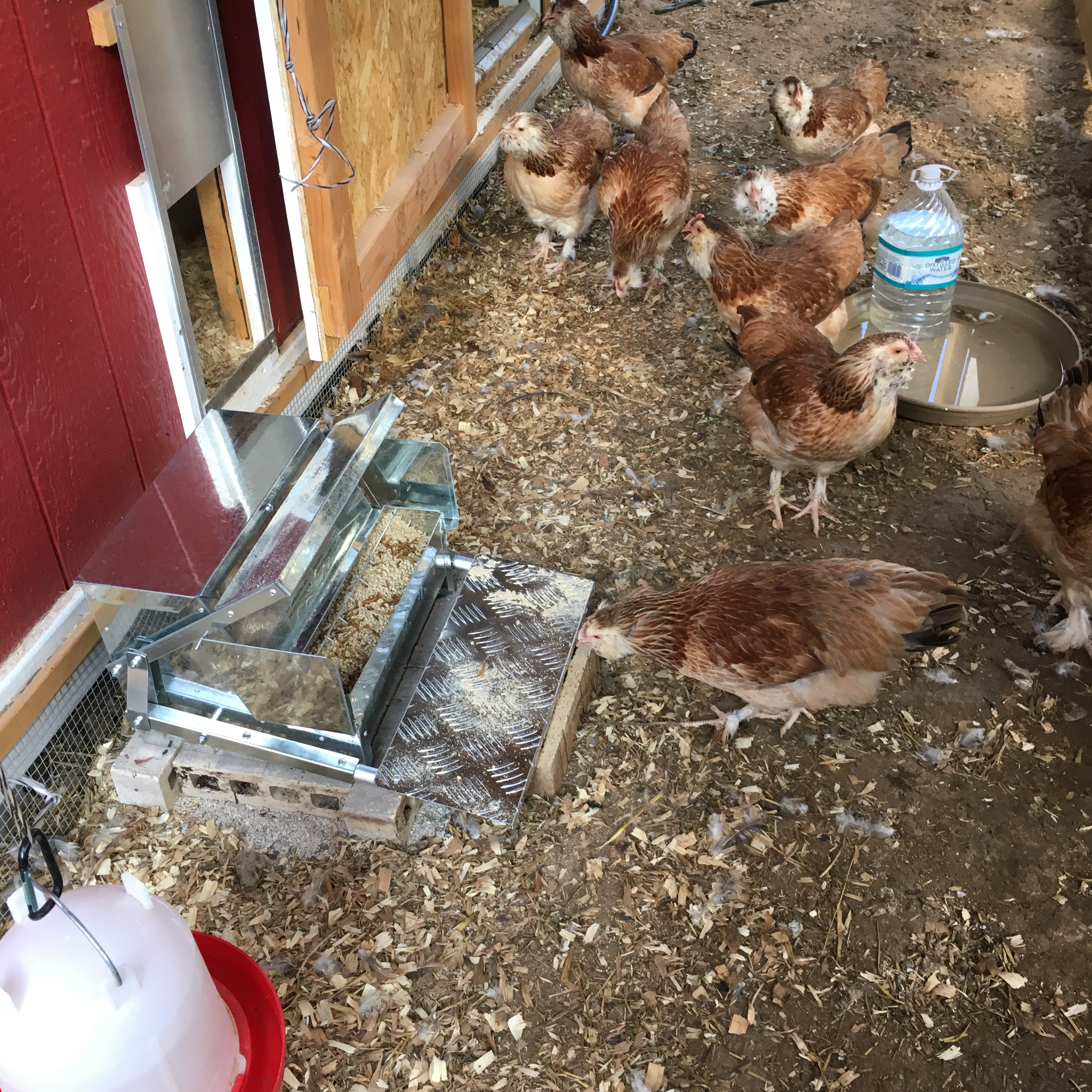
Grandpa’s Feeder set up on bricks outside the coop

There are three stages to train chickens to use the feeder. The first stage holds the lid of the feed area open with no movement. This stage lasts a week. We started this stage and Cloud was my brave chicken; the first to eat from the feeder! I put mealworms in there on top of the feed, so there was definite incentive.

Cloud investigating the new feeder

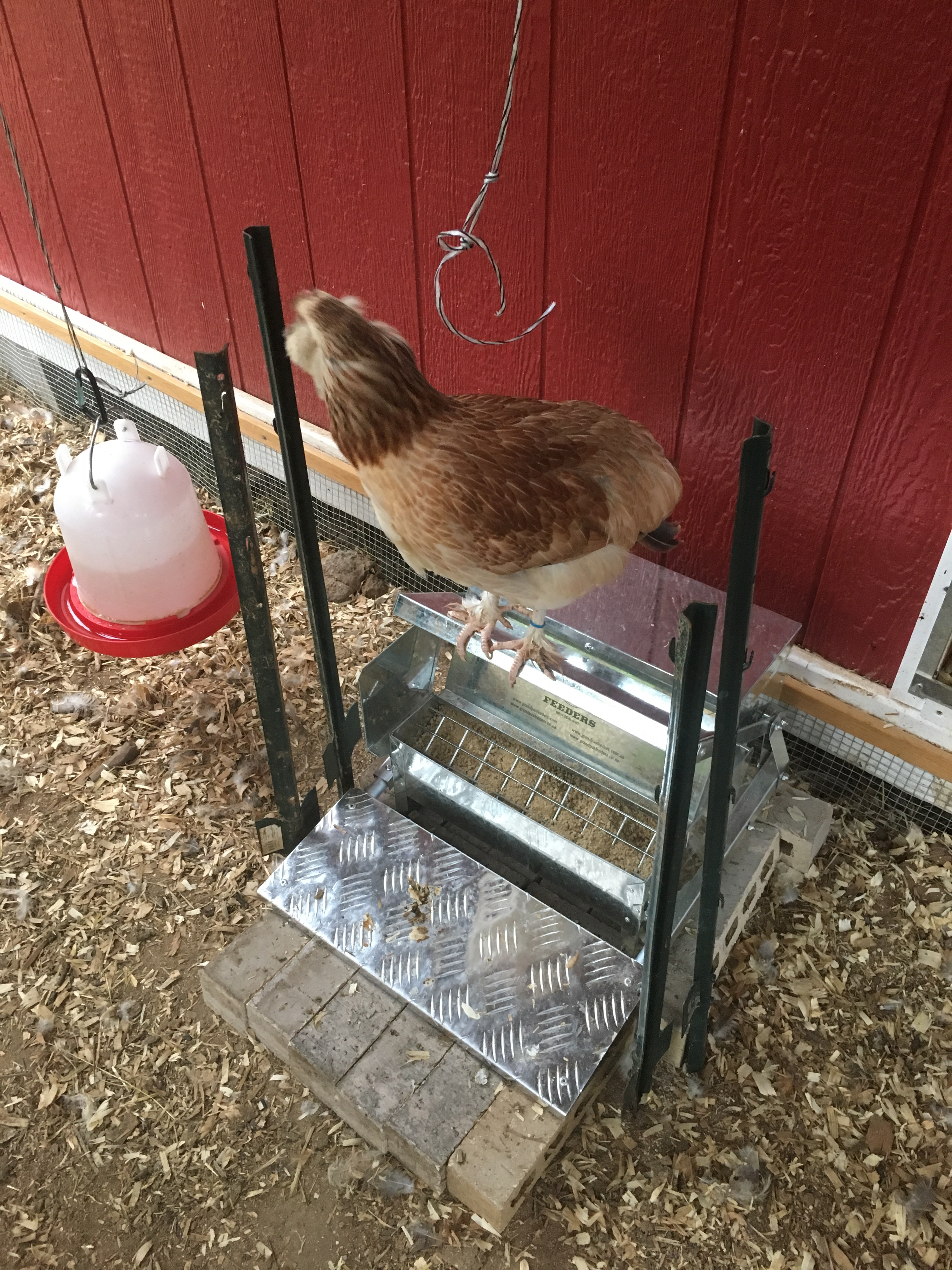
I noticed as the other chickens started to try it, that they were reaching in from the side and not standing on the treadle. The instructions say to block the sides with a box or something similar to keep this from happening. A box would block the coop door, but I have a bunch of temporary fence stakes, so I pounded one in on each side. Those long necked chickens could still reach around, so I added another stake. That did it! Now they all stand on the treadle to eat. I added some more bricks too so there is a step up.

Nice try, you have to stand on the treadle to eat.

The next stage is allowing some movement with the treadle and lid. I’ll see if I need to expand my brick area and how long it takes for the chickens to get used to the movement. But I have a few days before I worry about that! Then another week before we try full movement.

That was short-lived

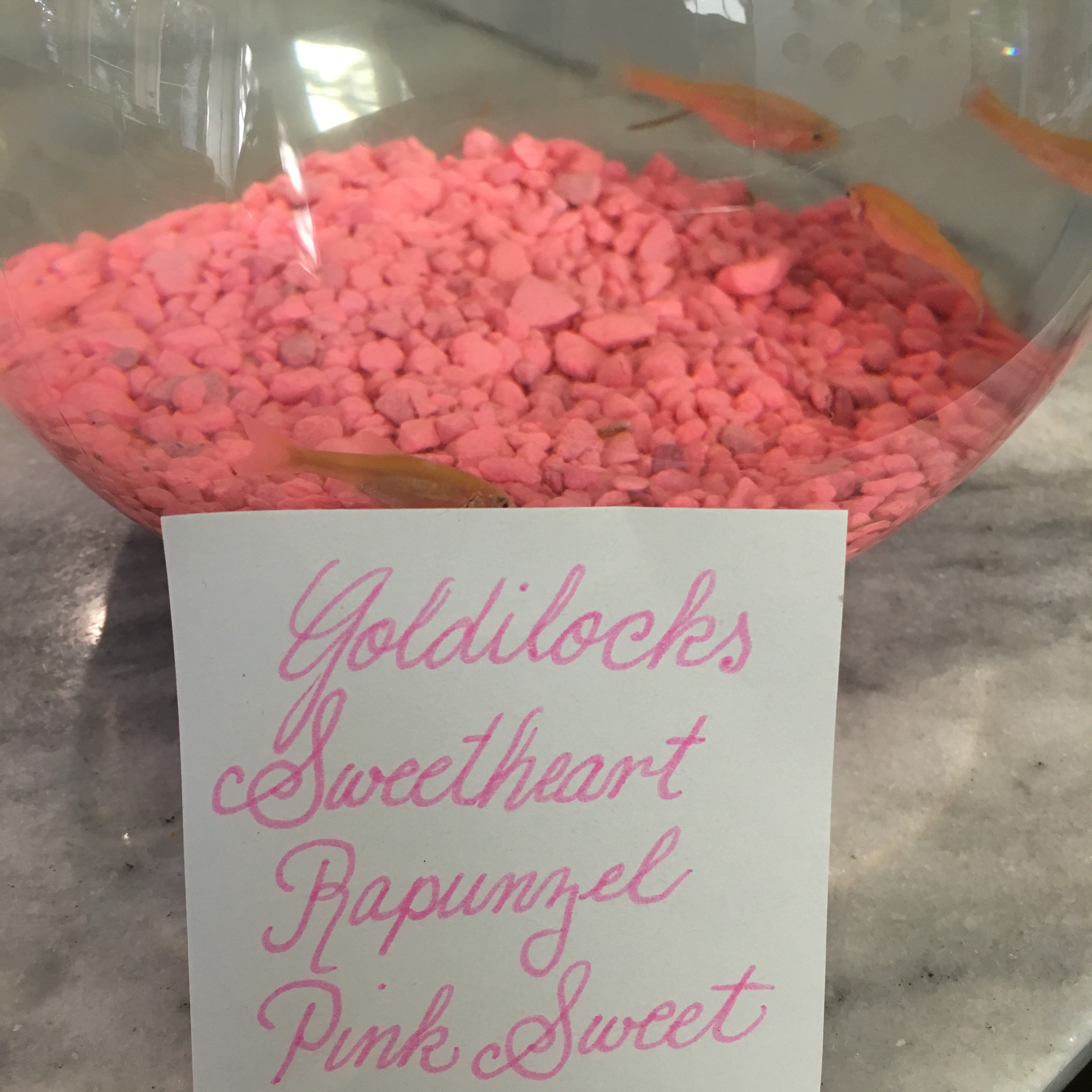
So I was doling out the minnows about 4 per day to the chickens. The first two feedings went well. The third was OK, by the fourth day there was very little interest. We couldn’t even get our cats interested in the wiggly things. So we ended up bringing the last four back to the tank. (I promised my youngest she could keep two of the minnows.) All that activity was too much for two of the fish, and they passed on, but my youngest now has four pink minnows in a pink tank. She is thrilled!

Named minnows